10 Best Enameled Copper Wire Suppliers in 2026
Choosing a reliable Enameled Copper Wire supplier affects motor life, transformer safety, and production consistency. The right wire must withstand heat, voltage, bending, abrasion, and long operating periods. A polished catalogue alone proves very little.
Dr. Michael G. Danikas, an electrical insulation researcher, has stated, “Electrical insulation is a material system, not merely a protective layer.” That principle guides this supplier review. Enameled Copper Wire depends on conductor purity, enamel adhesion, insulation thickness, thermal class, and resistance stability. Small defects can become serious failures inside a tightly wound coil. A single pinhole may remain invisible until voltage, heat, and vibration expose it.
This guide examines ten leading suppliers for 2026. It considers manufacturing experience, quality-control procedures, certifications, testing capacity, delivery reliability, customization, and technical support. Particular attention goes to diameter tolerance, dielectric strength, solderability, flexibility, and traceability. These details matter on the factory floor. They matter when a winding machine runs continuously at high speed.
No supplier is perfect. Pricing can hide limitations. A strong specification sheet can still miss production variation. Buyers should request recent test reports, samples, and clear warranty terms before committing. Local support may also matter more than a famous brand. That is sometimes overlooked.
The list is designed for engineers, procurement teams, and manufacturers comparing practical options. It does not replace application testing. Your operating temperature, insulation system, winding tension, and end-use requirements must shape the final decision.
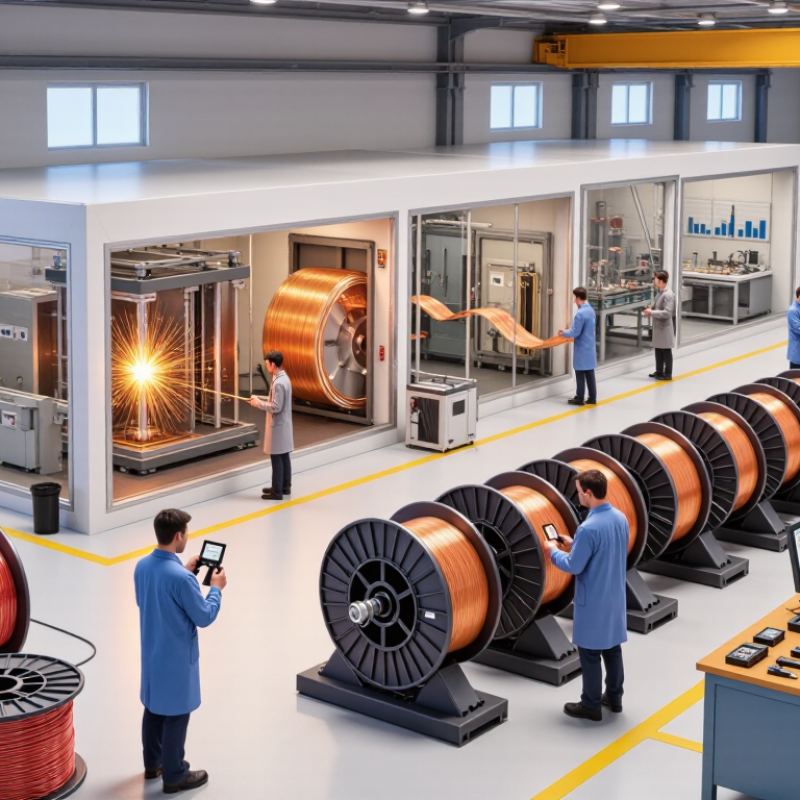
What Enamelled Copper Wire Is and Where It Is Used
Enamelled copper wire combines a highly conductive copper core with a thin insulating enamel coating. This coating allows the wire to carry current while preventing neighboring turns from touching. Unlike plastic-covered wire, it fits tightly into small winding spaces. That difference matters in compact electrical equipment.
Manufacturers use enamelled copper wire in motors, transformers, generators, relays, speakers, and induction coils. It also appears in household appliances and industrial control systems. The wire’s diameter affects resistance, heat generation, and winding space. Its thermal rating shows how much heat the insulation can tolerate during operation. In practical testing, technicians often inspect the coating for scratches, uneven surfaces, and poor flexibility. One small defect can weaken an entire winding.
Tips:
Match the wire’s diameter, thermal class, and insulation type to the equipment design. Check technical certificates and test samples before placing a large order. Store coils in a dry, clean area, away from sharp edges. Avoid pulling the wire too forcefully during winding. It may look durable. It is not indestructible. I would also question unusually low prices, because coating quality and dimensional accuracy can be difficult to judge visually. Reliable suppliers should provide clear specifications, traceable test records, and consistent production results.
Key Product and Manufacturing Standards to Compare
When comparing the 10 best enameled copper wire suppliers in 2026, product standards deserve more attention than catalog size. The International Energy Agency’s Global EV Outlook 2025 reported more than 17 million electric cars sold in 2024. That growth increases demand for winding wire in motors, chargers, and transformers. A reliable supplier should state conductor diameter, copper purity, elongation, and resistance values clearly. Check compliance with IEC 60317 or NEMA MW 1000. Thermal class matters too, especially for compact motors operating above 180°C. UL 1446 recognition can also support insulation-system credibility.
Manufacturing evidence is more useful than attractive claims. Ask for dielectric breakdown results, pinhole testing, bond-strength data, and batch traceability. The International Copper Study Group’s 2025 market outlook highlighted continuing pressure on refined copper supply, so stable sourcing deserves careful review. A supplier should explain its incoming-copper inspection and diameter-control process. Small deviations can increase winding loss. We sometimes focus too heavily on price. That is a mistake. Still, certificates alone do not guarantee consistent production; independent test samples may reveal uneven enamel thickness or poor flexibility.
Tips: Request three recent batch reports, not one. Compare thermal rating, test methods, and acceptance limits line by line. Visit the plant if volumes justify it. Inspect drawing machines, curing ovens, and laboratory equipment. Leave room for doubt. A technically polished datasheet can hide weak process control.
10 Leading Enamelled Copper Wire Suppliers in 2026
The 10 leading enamelled copper wire suppliers in 2026 serve motors, transformers, generators, and electric vehicles. Demand is rising with electrification. The International Energy Agency reported over 17 million electric cars were sold worldwide in 2024. Each traction motor needs compact, heat-resistant winding wire. This growth makes supplier capability more important than catalogue size.
A serious supplier should offer thermal classes such as 155, 180, or 200°C. It should also provide IEC 60317 or NEMA MW specifications, batch traceability, and test records. Useful checks include conductor resistance, elongation, dielectric breakdown, and pinhole counts. Grand View Research describes the magnet wire market as expanding at a mid-single-digit annual rate through 2030. That pace sounds moderate, but procurement pressure can rise quickly during copper price swings. Some suppliers still present impressive samples without showing stable lot performance. That deserves skepticism.
Tips: Request three recent test reports, not one. Compare copper purity, coating thickness, spool accuracy, and delivery history. Confirm whether the supplier can support custom rectangular wire or fine gauges. Ask how rejected batches are isolated. A factory visit can reveal uneven winding, poor humidity control, or manual records. Price remains important, but a cheaper spool may create extra stripping, rewinding, and downtime. I would also test a small production lot before approving annual volume. Specification sheets are useful. Real process evidence is better.
How to Select the Right Supplier for Your Application
Choosing among the 10 best enameled copper wire suppliers in 2026 requires more than comparing prices. The correct supplier must match your application, production volume, and reliability targets. Check conductor diameter, insulation type, thermal class, dielectric strength, elongation, and solderability. Ask for current test reports, not generic certificates. A motor winding may need heat resistance, while a transformer coil may demand consistent insulation thickness. Small differences can cause large failures.
I have learned that a polished catalog proves very little. Request samples from the same production line used for regular orders. Measure the wire under realistic tension and winding speed. Check whether the enamel cracks around tight bends. Review traceability, quality-control methods, complaint handling, and change-notification procedures. Delivery history matters too. A low price becomes expensive when a shipment arrives late or contains mixed spool lengths. Still, supplier claims should be independently verified. My own testing can be incomplete, and that weakness deserves attention.
Tips: Compare at least three suppliers using one written specification. Ask about minimum order quantities, replacement policies, and production capacity. Visit the facility when practical, or arrange a remote process audit. Confirm packaging details, especially moisture protection and spool labeling. Keep a retained sample from each approved batch. Do not select a supplier only because its sample performs well once. Repeat testing after several deliveries. Reliable partnerships grow from evidence, communication, and careful review.
10 Best Enameled Copper Wire Suppliers in 2026: Selecting the Right Supplier for Your Application
Thermal class is a practical first-screening criterion when evaluating enameled copper wire suppliers. The chart shows the maximum rated temperature associated with commonly used insulation thermal classes. Select a supplier that can provide the required class, verified test documentation, dimensional consistency, and application-specific compliance.
Reference basis: internationally recognized insulation thermal classes commonly used for electrical winding wires. The temperature values represent the insulation system’s rated thermal class, not the recommended continuous operating temperature of every finished product.