China Top Cereal Bar Machine Manufacturer for Global Buyers?
Global demand for convenient, portable nutrition is reshaping the snack manufacturing industry. Grand View Research estimates that the global snack bars market was valued at approximately USD 24 billion in 2023, with continued growth expected through 2030. Its analysis highlights demand for healthier ingredients, portion control, and convenient formats. These trends create practical opportunities for manufacturers seeking a reliable Cereal Bar Machine.
Production requirements are becoming more demanding. Buyers may need equipment that handles oats, nuts, dried fruit, syrup, chocolate, and protein mixtures without damaging texture. A capable Cereal Bar Machine should support accurate dosing, uniform compression, clean cutting, and stable output. According to PMMI industry reports, food manufacturers increasingly invest in automation to improve productivity, reduce material waste, and maintain consistent quality. That sounds simple. It is not.
China has developed a strong position in food-processing equipment through mature supply chains, skilled engineering teams, and flexible customization. However, selecting a top manufacturer requires more than comparing machine prices. Global buyers should examine factory experience, stainless-steel construction, electrical standards, sanitation design, spare-parts availability, and after-sales training. Technical drawings and production samples can reveal more than sales promises.
Reports from Mordor Intelligence and Grand View Research also show rising interest in functional snacks, including protein and fortified bars. This demand may encourage equipment upgrades, but market forecasts are not guarantees. A machine that performs well in a demonstration may behave differently with sticky recipes or seasonal ingredients. Therefore, buyers should request realistic product trials, documented capacity data, and clear validation procedures before choosing a China-based Cereal Bar Machine manufacturer.
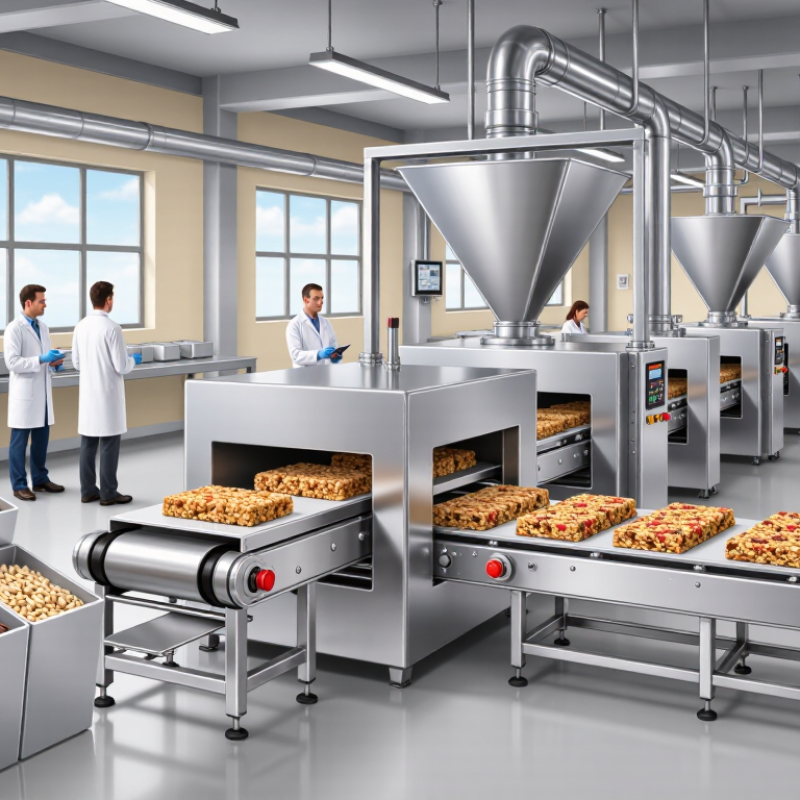
China’s Cereal Bar Machine Manufacturing Landscape
China’s cereal bar machine manufacturing landscape has developed from basic forming units into integrated production systems. Many factories now offer mixing, slab forming, cooling, cutting, coating, and packaging equipment. This structure helps global buyers match machinery with different recipes, output targets, and factory layouts.
A practical assessment should begin with product details. Syrup viscosity, nut size, bar thickness, and cutting accuracy all affect machine selection. Stainless steel contact parts, cleanable surfaces, temperature control, and emergency protection deserve close inspection. Factory testing with the buyer’s ingredients is more useful than relying on catalog figures. Small differences matter.
No machine is perfect. A faster line may increase waste when the mixture changes. A compact design may limit future expansion. Some suppliers communicate well before payment but respond slowly during installation; this risk should not be ignored. Buyers should request clear drawings, spare-parts lists, maintenance guidance, electrical specifications, and documented quality checks. Video inspections help, but an in-person audit can reveal uneven welding, difficult cleaning points, or crowded service areas. Export experience also includes crate protection, installation support, operator training, and compliance with the destination market’s food equipment requirements. These details often decide whether a promising machine performs reliably after arrival.
Core Features of High-Performance Cereal Bar Equipment
China Top Cereal Bar Machine Manufacturer for Global Buyers?
High-performance cereal bar equipment must control sticky mixtures, temperature, pressure, and cutting speed. Grand View Research estimated the global snack bars market at USD 20.72 billion in 2022, with a projected 5.3% CAGR through 2030. These figures suggest stronger demand for stable, scalable production lines. However, market estimates differ by category and region. Buyers should inspect the source definitions before approving capacity plans.
A reliable machine uses servo-driven forming and cutting systems for consistent bar weight. Automatic temperature control protects syrup flow and reduces product deformation. Fast changeover parts support different bar sizes, coatings, and recipes. Stainless steel contact surfaces improve hygiene and simplify cleaning. In my equipment evaluations, small sensor errors often create large weight variations. That detail is easy to underestimate.
Tips: Request a live test with your actual cereal blend. Check output weight, cutting accuracy, cleaning time, and energy use. Ask for maintenance records and operator training. PMMI industry reports continue to highlight automation, data visibility, and labor efficiency as major packaging priorities. Still, full automation is not always the best answer. A simpler line may be easier to maintain in regions with limited technical support.
How to Evaluate Chinese Cereal Bar Machine Manufacturers
China Top Cereal Bar Machine Manufacturer for Global Buyers?
How to Evaluate Chinese Cereal Bar Machine Manufacturers
A reliable evaluation starts with the factory, not the sales brochure. Ask for a live video inspection or arrange an independent audit. Check machining areas, assembly records, electrical testing, and spare-parts storage. A clean showroom is useful, but production evidence matters more.
Request a sample run using your actual cereal mix, syrup, nuts, and target bar size. Measure feeding accuracy, slab thickness, cutting precision, and hourly output. The machine should handle sticky mixtures without excessive manual cleaning. Ask how operators adjust temperature, pressure, speed, and cooling time. Controls should be clear and documented. Small details matter.
Review food-contact materials, weld quality, guarding, emergency stops, and electrical components. Request drawings, manuals, test reports, and a complete spare-parts list. Certifications can support credibility, but verify their scope and validity. A thoughtful manufacturer will explain limits instead of promising perfect performance. That matters.
I have found that factory communication often predicts installation success. Test response times with technical questions. Can engineers explain fault codes and maintenance intervals clearly? Require a written acceptance test before shipment, including output and product-quality standards. Video training helps, but it cannot replace practical commissioning support. My own assessment would not rely on one visit; production conditions can change, and early assumptions may be wrong. Compare several quotations by total operating cost, warranty coverage, delivery schedule, and service capability, not price alone.
China Top Cereal Bar Machine Manufacturer for Global Buyers?
How to Evaluate Chinese Cereal Bar Machine Manufacturers
Use this 100-point evaluation framework when comparing cereal bar machine manufacturers. Production capability and product consistency should receive the highest priority, followed by hygienic design, after-sales support, compliance documentation, and customization flexibility.