China has become a major sourcing destination for packaging and converting equipment. For global buyers, choosing the best Foil Machine requires more than comparing prices. Machine stability, registration accuracy, heating control, spare-part access, and operator training directly affect production results.
Smithers reported that the global flexible packaging market is expected to continue expanding through 2028, supported by food, pharmaceutical, personal-care, and premium consumer products. Its industry analysis also highlights sustainability pressure, shorter production runs, and demand for more efficient converting systems. Grand View Research similarly identifies automation and digital control as important trends across the packaging machinery sector. These findings suggest a practical point: a low purchase price may become expensive when downtime, foil waste, and inconsistent temperature control appear on the factory floor.
Jeff Peterson, Executive Director of the Foil & Specialty Effects Association, has said, “Foil and specialty effects help products stand out and communicate quality at the point of sale.” That observation explains why a dependable Foil Machine matters beyond decoration. It supports brand visibility, tactile finishing, and repeatable production.
However, reports rarely show the full buying experience. They may not reveal how quickly a Chinese supplier answers a technical question at 2 a.m., or whether a replacement heating element arrives before a customer’s shipment deadline. Buyers should inspect sample work, request factory videos, verify electrical specifications, and test registration under real production conditions. Certifications help. They do not replace evidence.
China offers capable manufacturers, but not every supplier fits every application. The best choice combines verified performance, transparent communication, and long-term service. Pricing still matters. It should not lead the decision.
What Is a Foil Machine and How Does It Work?
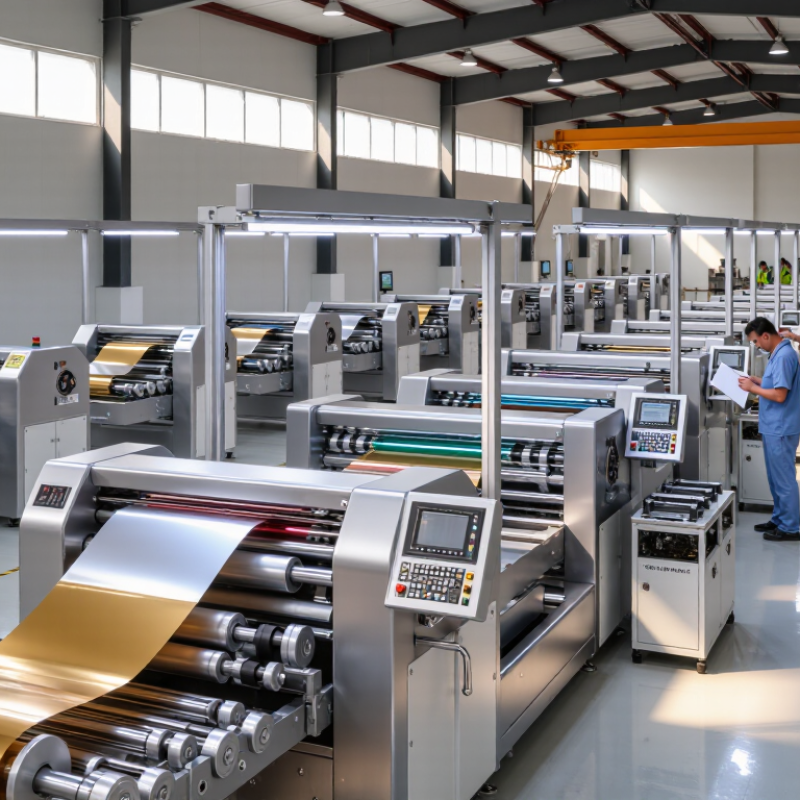
A foil machine transfers a thin metallic or pigmented film onto paper, board, labels, or coated plastics. It uses heat, pressure, and a raised or flat image carrier. The heated die activates the foil’s adhesive layer. Pressure then bonds the image to the surface. The carrier film peels away. A clean, reflective mark remains.
Modern machines may use hot foil stamping, cold foil transfer, or digital foil application. Hot stamping suits solid, premium-looking details, while cold foil supports faster inline printing. Digital systems can reduce setup time for short runs. According to Smithers’ 2024 packaging market analysis, global packaging demand continues to expand, driven by branding, e-commerce, and higher-value presentation. This supports continued investment in precise finishing equipment. Yet, output quality depends heavily on temperature, pressure, dwell time, and substrate moisture. Small errors show quickly. I have seen attractive artwork fail because the board was too rough.
Tips: Test the exact substrate before production. Begin with moderate heat and pressure. Increase settings gradually. Check foil release, edge sharpness, and registration under angled light. Keep records for each material. The ideal setting is rarely universal. A 2023 technical report from the Flexible Packaging Association also highlights material compatibility and recyclability as growing design concerns. Foil layers may look impressive, but excessive coverage can complicate recovery processes. That point deserves more attention from buyers.
A hot foil stamping machine transfers a metallic or pigmented foil onto a surface by combining a heated die, controlled pressure, and dwell time. The temperatures below are typical starting points for common substrates; actual settings vary with foil construction, coating, machine speed, pressure, and substrate thickness.
Choosing a Chinese foil machine supplier can offer practical advantages for global buyers. China has a mature manufacturing network for printing, packaging, and finishing equipment. Suppliers often work with engineers, metal processors, control-system specialists, and export teams in the same region. This structure can shorten communication time and support faster machine adjustments.
Technical flexibility is another reason to consider China. A supplier may adapt foil width, heating zones, stamping speed, feeding systems, or voltage requirements. For example, a packaging factory may need stable performance on coated paper at 90 meters per minute. A capable supplier should test this material before shipment and provide clear results. Ask for proof.
Quality depends on process, not location. Reliable suppliers should show inspection records, electrical test reports, spare-parts lists, and operating videos. They should explain temperature control, pressure adjustment, maintenance intervals, and operator training. Remote support can also reduce downtime after installation. Details matter. However, not every supplier offers the same engineering depth or after-sales service. Buyers should compare factory experience, response times, sample results, and warranty terms. An honest supplier will also explain limitations instead of promising perfect results. That candor may feel less impressive, but it supports safer purchasing decisions and more predictable production.
Choosing a foil machine manufacturer requires more than comparing online prices. A polished website is not proof of production strength. Visit the factory, if possible, and inspect assembly areas, testing stations, and spare-part storage. Ask how long technicians have worked with the equipment. Their answers often reveal practical experience.
Request a trial using your actual substrate, foil type, and production speed. Check adhesion, registration accuracy, heating stability, and waste levels. Small details matter. Measure the first and last sheets from a continuous run. A reliable manufacturer should provide electrical drawings, operating manuals, maintenance schedules, and clear safety documentation. Confirm whether the machine meets the regulations required in your destination market. Vague answers deserve caution.
Evaluate service after delivery, not only the machine itself. Ask about remote support hours, response times, installation guidance, and critical spare-part availability. Speak with recent overseas customers, while remembering that references may show only successful cases. Compare the complete cost, including packaging, training, shipping, commissioning, and downtime risks. I would also request a written acceptance standard before payment. It prevents later arguments, although it cannot remove every risk. No evaluation is perfect. A promising test may still hide weaknesses during long production runs. Keep records, challenge assumptions, and leave room for a second inspection.
Global buyers usually judge a foil machine by consistency, not impressive brochure speed.
In daily production, stable temperature control prevents dull patches, broken foil, and uneven transfer. A responsive pressure system matters when materials change from coated paper to textured stock. Working width should match common sheet sizes, while adjustable speed protects delicate surfaces. Registration accuracy is equally important for detailed packaging and commercial print work. Small errors become costly at scale.
Tips: Ask for a live sample using your actual substrate, foil, and artwork. Check heat-up time, noise, power consumption, and cleaning access. Request data for pressure range, temperature tolerance, and maximum working speed. Confirm whether sensors detect sheet misfeeds and stop safely. A clear control panel helps new operators learn faster. Remote support is useful, but local service capability may matter more. I would not trust a perfect test video alone.
Reliable construction shows in reinforced rollers, accessible heating parts, and replaceable wear components. Safety guards, emergency stops, and documented electrical compliance should be non-negotiable. Buyers should also examine training materials, spare-part lead times, and warranty terms. Some machines promise high output but require frequent adjustment. That hidden labor can erase the purchase advantage. The fastest model may not be the most practical. Repeatable results and dependable support often matter more after installation.
When comparing a foil machine supplier, price is only the visible part of the purchase. A low quotation may exclude tooling, shipping, installation, or future software updates. Request an itemized offer with machine speed, working width, power use, and included accessories. Then compare equal specifications, not attractive totals. A clear offer builds trust.
Quality becomes easier to judge through evidence. Ask for production videos, test results, and samples using your actual foil and substrate. Inspect feeding accuracy, temperature stability, pressure control, and waste levels. A reliable supplier should explain maintenance intervals and common failure points. Do not accept vague promises. Small details matter.
Certification should match the destination market and machine configuration. Review valid documents, testing scope, serial numbers, and responsible issuing bodies. A certificate without traceable information is weak evidence. Support also deserves a measurable comparison. Check response hours, spare-part availability, remote diagnosis, training, and warranty limits. Ask who pays for troubleshooting travel. I once focused too heavily on the purchase price and underestimated training delays. That mistake changed my evaluation sheet. One more caution: published performance may reflect ideal materials and skilled operators. Request a realistic trial before signing. Good suppliers welcome difficult questions, even when the answers are inconvenient.
| Evaluation Dimension | Entry-Level Supplier Profile | Mid-Range Supplier Profile | Premium Export-Oriented Supplier Profile | What Global Buyers Should Verify |
|---|---|---|---|---|
| Typical Machine Type | Manual or semi-automatic hot foil stamping machine for small batches and basic flat materials. | Automatic or semi-automatic sheet-fed hot foil stamping machine for commercial and packaging production. | High-speed automatic hot foil stamping or foil stamping and die-cutting line for continuous industrial production. | Confirm whether the machine is designed for paper, folding carton, labels, plastic sheets, leather, or other substrates. |
| Indicative Equipment Price Range | Approximately USD 3,000–15,000, excluding freight, installation, tooling, and local taxes. | Approximately USD 15,000–60,000, depending on format, automation, and production speed. | Approximately USD 60,000–250,000 or more for large-format, high-speed, or integrated systems. | Request a total landed-cost quotation that includes packaging, spare parts, commissioning, training, freight, duties, and applicable taxes. |
| Typical Working Format | Small-format areas commonly used for cards, invitations, labels, and limited decorative work. | Medium sheet formats suitable for commercial print, cartons, covers, and general packaging. | Large sheet formats and customized feeding systems for high-volume packaging and industrial applications. | Compare maximum sheet size, minimum sheet size, usable stamping area, and compatibility with the buyer’s existing workflow. |
| Production Speed | Generally suitable for low-volume production; actual output depends heavily on artwork, foil coverage, and operator skill. | Commonly suitable for medium-volume production with automated feeding and improved registration control. | Designed for high-volume production with faster feeding, servo control, multiple foil zones, and automated monitoring. | Compare practical output rather than the headline maximum speed. Ask for test results using the buyer’s actual material and design. |
| Registration Accuracy | Usually adequate for simple single-position stamping, but operator adjustment may be required. | Typically provides more stable sheet feeding, positioning, and pressure adjustment for repeated production. | Usually offers advanced servo positioning, automatic correction, multiple-zone control, and stronger repeatability. | Request tolerances in millimetres, sample production records, and details of the feeding and registration system. |
| Foil Control | Basic foil feeding and tension adjustment, often with limited foil-saving functions. | Multiple foil-roll support and adjustable foil advance may be available, reducing waste during standard production. | Advanced foil-saving, independent foil-zone control, programmable foil advance, and production monitoring are more common. | Check supported foil widths, maximum roll diameter, foil tension range, waste rate, and compatibility with the intended foil type. |
| Heating System | Basic heating zones with manual temperature adjustment. | Multiple independently controlled heating zones with improved temperature stability. | Advanced temperature control, faster heat-up, thermal monitoring, and recipe storage for repeat jobs. | Confirm operating temperature range, temperature stability, heat-up time, and availability of replacement heating elements. |
| Build Quality and Service Life | Suitable for light or intermittent use when correctly operated and maintained. | More robust frame, feeding system, drive components, and pressure mechanism for regular production. | Heavy-duty construction and higher-grade components intended for demanding, multi-shift operation. | Inspect frame construction, platen or cylinder design, drive components, lubrication points, maintenance records, and reference installations. |
| Electrical Compatibility | Often configurable for common single-phase or three-phase systems, subject to machine size. | Usually available in several voltage and frequency configurations for international markets. | Typically engineered with export electrical cabinets, documented wiring, overload protection, and configurable power requirements. | Confirm voltage, frequency, phase, rated power, plug type, circuit protection, and compliance with the destination country’s electrical rules. |
| Common Certification Documentation | Basic electrical documentation and user manuals may be available; certification scope varies by configuration. | May provide CE-related technical documentation, risk assessment materials, electrical diagrams, and inspection records when requested. | More likely to provide a complete technical file, declaration of conformity, safety documentation, factory test records, and export support. | Verify the exact machine model, certificate validity, issuing body, applicable standards, and whether the documents cover the shipped configuration. |
| Factory Quality Control | Basic to Moderate Quality may depend strongly on final assembly and inspection procedures. | Moderate to Strong More structured incoming-material, assembly, electrical, and final-run testing is expected. | Strong Typically includes documented inspection checkpoints, machine testing, traceability, and pre-shipment verification. | Request inspection checklists, factory acceptance test procedures, videos of the actual machine, and records of corrective actions. |
| Sample Testing Before Purchase | May be limited to standard materials and simple artwork. | Usually able to test customer-provided sheets, dies, and foil under agreed conditions. | More likely to offer structured trials with production samples, measurable results, and process recommendations. | Send the actual substrate, foil, artwork, and die specification whenever possible; approve samples before mass production or shipment. |
| Warranty Terms | Often around 12 months, with exclusions for consumables, misuse, and normal wear. | Commonly around 12 months, sometimes with defined response times and optional extended coverage. | May offer 12–24 months or customized service agreements, subject to machine configuration and destination. | Clarify warranty start date, covered parts, labour responsibility, shipping costs, response time, and exclusions. |
| Spare Parts Availability | Basic spare-parts list may be available, but delivery time can vary. | Common wear parts and electrical components are more likely to be stocked or readily sourced. | Usually provides a recommended spare-parts package, component specifications, and structured after-sales supply. | Obtain a priced spare-parts list for two years of operation, including heaters, sensors, belts, bearings, switches, and control components. |
| Installation and Training | Remote guidance, manuals, and video instructions are most common. | Remote commissioning is commonly available, with optional paid on-site installation and operator training. | More likely to provide formal commissioning, process training, maintenance training, and production optimization support. | Confirm who pays for travel, accommodation, installation materials, translation, training hours, and follow-up support. |
| Technical Support Channels | Email or online messaging support during business hours. | Email, messaging, video troubleshooting, remote diagnostics, and documented maintenance instructions. | Dedicated technical contacts, remote diagnostics, service-level commitments, application engineering, and regional support options. | Ask for average response time, escalation procedures, language support, spare-parts response time, and holiday coverage. |
| Lead Time | Often shorter for standard models, but stock status and configuration should be confirmed. | Typically depends on automation level, format, electrical configuration, and customization. | May require longer engineering and production time because of integrated systems, customized tooling, or factory testing. | Request a written production schedule with milestones for design approval, testing, packing, and shipment. |
| Recommended Buyer Profile | Start-ups, small print shops, craft production, sample rooms, and buyers with limited daily output. | Commercial printers and packaging producers seeking a balance between investment, automation, and output. | High-volume packaging plants and industrial users prioritizing uptime, repeatability, integration, and long-term service. | Match the machine to annual volume, available operators, substrate range, floor space, power supply, and required payback period. |
| Overall Evaluation Priority | Low initial cost, simple operation, basic maintainability, and readily available consumables. | Balanced price-to-performance ratio, reliable registration, moderate automation, and dependable technical support. | Total cost of ownership, uptime, process stability, automation, documentation, safety, and global after-sales capability. | Use a weighted scorecard rather than selecting solely on the lowest quoted equipment price. |
You are using an outdated browser. Things may not appear as intended. We recommend updating your browser to the latest version.
Close