What Are the China Top 10 Insert Molding Manufacturers?

Choosing the China top 10 insert molding manufacturers requires more than counting factory size or export volume. Insert molding combines metal preparation, polymer flow, tooling accuracy, and stable production control. A small defect around a brass insert can cause thread damage, leakage, or assembly failure.

This introduction examines manufacturers through practical buyer criteria. These include insert placement accuracy, mold design capability, material compatibility, automation, inspection methods, and traceable quality records. ISO 9001 certification can support confidence, but it cannot replace an on-site audit or production trial. John Bozzelli, a respected injection molding consultant, often emphasizes, “If you cannot measure it, you cannot control it.” That principle matters when reviewing cavity pressure, pull-out strength, dimensional results, and cycle consistency.

The selected companies should be viewed as strong candidates, not unquestionable winners. Their experience may vary across automotive, electronics, medical, and industrial applications. A supplier with impressive equipment may still struggle with communication or engineering changes. That uncomfortable detail deserves attention. No ranking is flawless. Buyers should confirm current certifications, sample approval procedures, tooling ownership, and after-sales support directly with each manufacturer. Factory photos can look polished. Production evidence is more valuable.

This guide aims to make comparison clearer and more realistic. It considers proven insert molding experience, technical depth, manufacturing reliability, and responsiveness. Readers should also reflect on their own requirements before choosing a partner. The lowest quoted price may become expensive after repeated mold corrections, unstable tolerances, or delayed deliveries.
What Are the China Top 10 Insert Molding Manufacturers?

What Is Insert Molding and Why Is It Important in China?

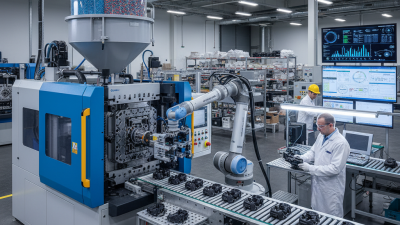
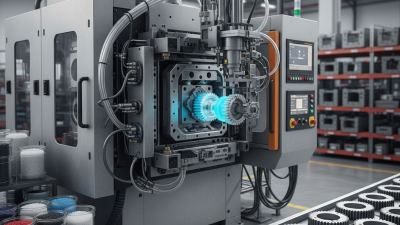
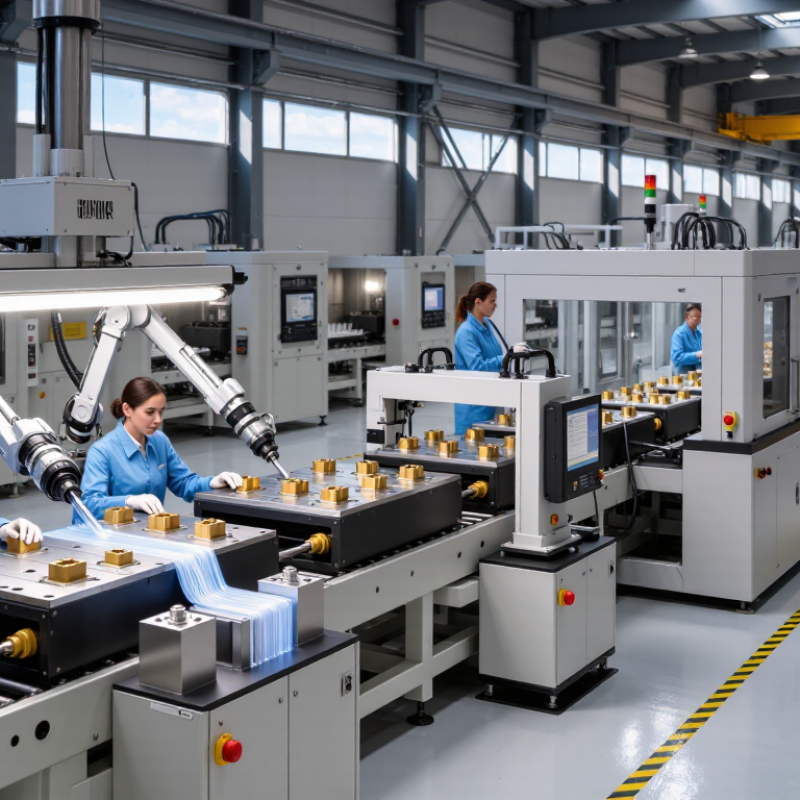
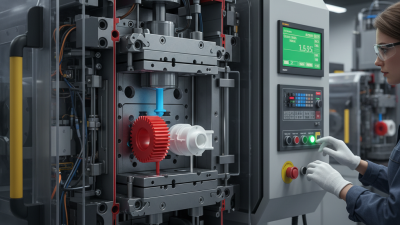
Insert molding combines plastic injection with a pre-positioned insert, such as a metal pin, threaded bushing, wire, or sensor contact.

During molding, molten resin surrounds the insert and forms one integrated component. The result can reduce assembly steps, improve alignment, and protect sensitive connections from movement.

Small parts matter.

A loose insert may cause electrical failure, weak fastening, or visible deformation.

China is important because it combines extensive tooling capacity, material suppliers, automation, and electronics production.

UNIDO’s International Yearbook of Industrial Statistics 2024 reported that China contributed about 31.6% of global manufacturing value added in 2022. That scale supports faster sourcing and process development.

Grand View Research valued the global injection molding machine market at approximately USD 19.2 billion in 2023, with continued growth expected through 2030. This broader market figure is not an insert molding statistic, but it shows the industrial base behind the process.

Reliable insert molding still depends on detailed engineering.

Designers must control insert placement, resin flow, shrinkage, mold temperature, and pull-out strength.

Automated loading can improve repeatability, yet it may increase tooling cost and maintenance demands. Manual loading can be flexible, but operator variation remains a risk.

The process is not automatically better. A poorly designed insert can create stress marks, short shots, or hidden cracks.

Trial molding, dimensional inspection, and documented process limits are essential before volume production.
How to Evaluate China’s Top Insert Molding Manufacturers

Evaluating China’s top insert molding manufacturers requires more than comparing unit prices. Grand View Research estimates the global injection molded plastics market will grow at about 4.8% annually through 2030. This growth increases pressure on suppliers to control tooling, resin use, and delivery risk. Ask for process-flow documents, mold-maintenance records, and recent dimensional reports. A capable factory should explain how metal inserts are cleaned, positioned, detected, and retained during molding.

Experience is visible on the production floor. Check whether operators use poka-yoke fixtures, barcode traceability, and first-article approval. Request CpK data for critical dimensions, not only final inspection summaries. A practical target is CpK 1.33 or higher for stable, important features, although product risk may require more.

The Plastics Industry Association reports that scrap reduction and energy efficiency remain major priorities in plastics manufacturing. Therefore, review scrap rates, machine utilization, and material-drying controls.

Cost deserves a wider lens. Compare mold life, engineering changes, packaging, freight, and warranty handling. According to the International Federation of Robotics, China remains the world’s largest industrial-robot market, but automation alone does not prove process maturity. Visit the facility or arrange a live video audit. Look closely at insert loading, mold cooling, and measurement routines. A supplier may present excellent samples yet lack repeatability. I have seen attractive pilot parts fail during volume production. That weakness is easy to overlook. Ask difficult questions before signing.

Who Are the Top 10 Insert Molding Manufacturers in China?

China’s top 10 insert molding manufacturers are best identified through verified capabilities, not advertising claims. The leading group includes precision mold builders, automotive component producers, electronics specialists, medical-device suppliers, and high-volume industrial molders. Some focus on brass terminals, threaded inserts, and stamped contacts. Others handle sensors, cable assemblies, or reinforced engineering plastics.

A reliable manufacturer should show documented experience with mold-flow analysis, insert placement, and automated inspection. Look for facilities with CNC machining, clean assembly areas, and controlled injection parameters. Strong suppliers usually provide material traceability, first-article reports, dimensional records, and process-capability data. Their engineers should explain how they prevent insert movement, flash, short shots, and weak bonding.

Practical details matter. Ask for sample parts with thin walls, multiple inserts, or tight concentricity requirements.

The top ten should also be judged by communication and corrective action. A factory that reports defects honestly is often safer than one promising perfection. I would review tooling ownership, production capacity, worker training, and inspection frequency before signing a contract. Regional rankings can change quickly, and some smaller manufacturers may outperform larger facilities on difficult projects. That is an uncomfortable point, but it deserves attention. Price alone cannot reveal mold life, resin stability, or long-term delivery reliability.

What Industries and Products Do These Manufacturers Serve?

China’s leading insert molding manufacturers serve demanding sectors, not one narrow market.

Automotive remains a major destination. The China Association of Automobile Manufacturers reported 31.28 million vehicle units produced in 2024. This scale creates demand for molded connectors, sensor housings, threaded terminals, and lightweight control components.

Manufacturers also support consumer electronics, where metal inserts improve strength inside compact switches, ports, and battery assemblies.

Medical products require tighter process control. Typical applications include diagnostic cartridges, surgical handles, fluid connectors, and wearable-device housings.

The World Health Organization reported continued growth in global demand for medical technologies, but insert molding suppliers must still prove traceability, clean production, and material compatibility.

Industrial equipment is another important field. Manufacturers produce reinforced knobs, cable glands, motor parts, and embedded fasteners for factory automation. Appliance makers use similar parts in relays, control panels, and heat-resistant assemblies.

The data shows opportunity, not automatic capability. China’s electronic information manufacturing value added rose 11.8% in 2024, according to the National Bureau of Statistics. That growth can increase orders for precise insert-molded components.

However, the “top ten” label is not absolute. A supplier may excel at high-volume automotive parts but struggle with medical validation. Buyers should examine mold-flow analysis, dimensional inspection, resin certificates, and production records.

Small details matter. Insert position, weld lines, and thermal expansion can decide whether a component survives real use. That is where rankings often need reflection.

How to Choose the Right Chinese Insert Molding Partner

Choosing among China’s top 10 insert molding manufacturers requires more than comparing quoted prices. Examine their experience with your insert materials, resin type, tolerances, and production volume. A capable partner should explain how inserts are positioned, detected, and protected during molding. Samples reveal weaknesses.

Request a documented process flow, tooling schedule, inspection plan, and material traceability records. Ask whether the factory performs mold-flow analysis, first-article inspection, and dimensional checks with calibrated equipment. Review relevant quality certifications, but do not treat certificates as proof of actual performance. Visit the facility when possible. Observe mold maintenance, operator training, storage conditions, and production records. These details often expose risks hidden in polished presentations.

Communication deserves equal attention. Your supplier should answer technical questions clearly and report problems before shipment. Confirm engineering-change procedures, replacement tooling arrangements, packaging standards, and realistic lead times in writing. A low quotation may exclude insert loading, secondary inspection, or mold maintenance. Clarify every cost. Do not rush.

A practical evaluation uses the same drawings, forecast, resin requirements, and quality expectations for all shortlisted manufacturers. Score technical capability, response speed, defect controls, and total cost. Then order a controlled pilot run before approving mass production. No supplier is perfect. Even a promising factory may underestimate a tolerance or overlook an assembly detail. Allow time for correction, and judge how responsibly the team responds.

Warning!

You are using an outdated browser. Things may not appear as intended. We recommend updating your browser to the latest version.

Close