Choosing a reliable Pcb Control Board manufacturer is not merely a purchasing decision. It is a safeguard for product performance, production continuity, and customer trust. A weak board may look acceptable under bright inspection lights, yet fail after repeated heat cycles or vibration. That failure can begin with a microscopic solder void.
As PCB expert Happy Holden states, “The PCB is the foundation of electronics.” His view explains why manufacturer selection deserves technical attention. An experienced supplier controls copper thickness, impedance, drilling accuracy, solder-mask coverage, and component placement. These details influence signal stability and service life. Strong manufacturers also provide traceable materials, documented inspections, and electrical testing before shipment. Certifications can support confidence, but certificates alone do not prove daily competence.
Ask practical questions. How are design changes recorded? Which tests are completed on every batch? Can the factory show cross-section reports and first-article results? A dependable partner should answer clearly and provide evidence. During my review of manufacturing projects, I have found that fast communication often prevents expensive rework. Still, no supplier is flawless. Even a respected factory can miss a marginal defect or delay a corrective action. That reality deserves honest discussion, not polished marketing language.
Reliability is built on repeatable processes. It grows through engineering judgment, transparent reporting, and measured improvement. The right Pcb Control Board manufacturer does more than deliver boards. It helps protect the entire product lifecycle. That support may seem quiet. It matters.
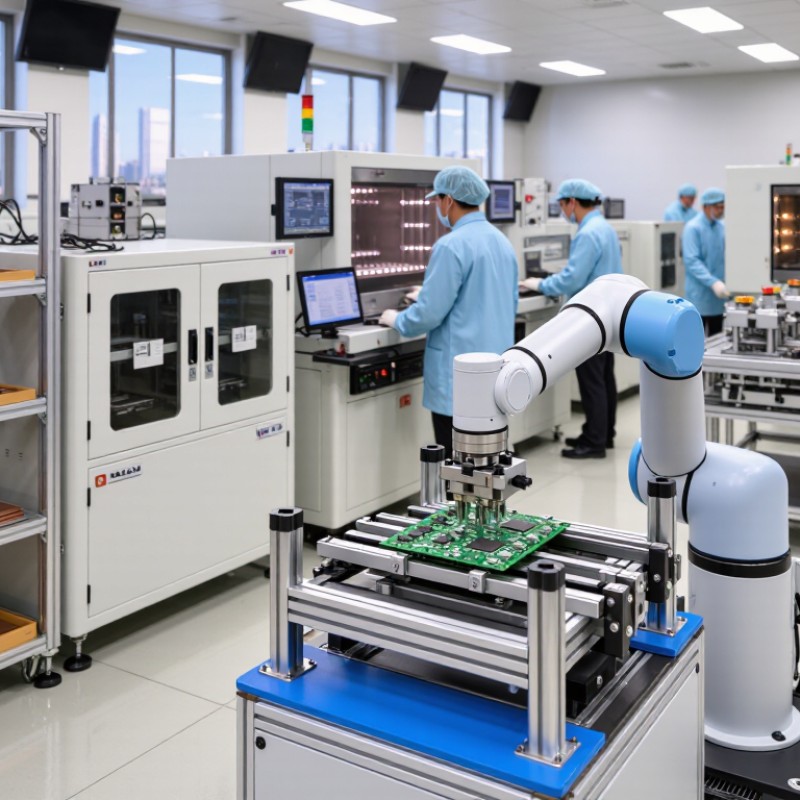
Why Choose a Reliable PCB Control Board Manufacturer?
IPC Class 2 and Class 3 criteria give PCB reliability a practical definition. Class 2 supports continued service, with minor defects accepted when function remains stable. Class 3 demands higher assurance for critical equipment. It requires tighter control of holes, solder joints, insulation, and surface quality under IPC standards.
A reliable manufacturer should document inspection results, material certificates, thermal testing, and traceability. Uptime Institute’s 2024 Annual Outage Analysis reported that 54% of respondents experienced outages costing over $100,000. About 20% reported losses above $1 million. A weak control board can turn a small solder void into expensive downtime. Yet, Class 3 compliance is not a magic shield. Design errors, poor storage, and rushed assembly can still create failures.
Tips: Ask for the exact IPC class, acceptance records, and test limits. Review cross-sections, not only photographs. Confirm humidity control and batch traceability. Do not assume the highest class always fits every product; it may increase cost without improving real-world performance. That judgment needs evidence.
| Reliability Dimension | IPC Class 2 | IPC Class 3 | What a Reliable Manufacturer Should Demonstrate |
|---|---|---|---|
| Intended product use | Dedicated-service electronic products where continued performance is important but uninterrupted operation is not always essential. | High-performance or high-reliability products where continued performance is essential and equipment downtime can be unacceptable. | A documented product classification agreed with the customer before design, fabrication, assembly, and inspection. |
| Acceptance standard | Meets the applicable Class 2 acceptance criteria in the referenced IPC workmanship and product standards. | Meets the applicable Class 3 acceptance criteria, which generally require more stringent control of conditions that could affect service performance. | Purchase documents identify the applicable IPC standards, revision levels, drawings, specifications, and acceptance class. |
| Visual workmanship | Visible features are evaluated against Class 2 criteria for soldering, component mounting, printed board condition, and assembly workmanship. | Visible features are evaluated against the more demanding Class 3 criteria, with less tolerance for conditions that may reduce service reliability. | Trained inspectors, calibrated microscopes and measurement tools, documented inspection records, and traceable nonconformance handling. |
| Plated-through holes and vias | Hole plating, land condition, annular ring, and barrel quality must meet the selected IPC product specification and Class 2 acceptance requirements. | The same features are controlled to Class 3 requirements where defects or marginal construction could threaten electrical or mechanical continuity. | Microsection analysis, cross-section records, drill-to-copper control, plating-thickness verification, and documented corrective action. |
| Solder joints | Solder coverage, wetting, fillets, component leads, and termination conditions must satisfy the applicable Class 2 criteria. | Solder joints must satisfy Class 3 criteria, particularly where insufficient wetting, poor coverage, or joint geometry could affect long-term function. | Process controls for solder paste, reflow or wave profiles, operator training, first-article review, and automated optical inspection. |
| Electrical integrity | The finished board must pass the electrical tests and design-specific requirements stated in the purchase documentation. | The finished board must pass the same applicable tests with acceptance conditions appropriate for high-reliability service. | 100% netlist testing where specified, insulation-resistance or hipot testing where applicable, controlled test fixtures, and retained test results. |
| Cleanliness and contamination control | Cleaning and contamination limits are determined by the product specification, process requirements, and intended operating environment. | Higher attention is normally required because ionic residues, moisture, and contamination can create leakage or electrochemical migration risks in demanding applications. | Controlled cleaning process, defined cleanliness limits, ionic contamination testing when required, and sealed handling after final cleaning. |
| Thermal and mechanical durability | Thermal cycling, thermal stress, vibration, shock, and mechanical requirements depend on the relevant board specification and product design. | The design and qualification plan must address the more demanding consequences of field failure and the specified operating environment. | Documented laminate selection, stack-up control, thermal-stress testing where applicable, and verification against the customer’s environmental profile. |
| Material and process traceability | Traceability is based on the customer’s quality agreement and applicable industry or regulatory requirements. | More extensive traceability is commonly expected for materials, processes, inspection results, and changes that could influence reliability. | Lot identification, material certificates, laminate and copper records, process history, operator or machine records, and controlled engineering changes. |
| Defect disposition | Defects are evaluated according to Class 2 criteria and the customer’s documented repair or concession process. | Potentially reliability-limiting defects receive stricter review, and use-as-is decisions require documented technical justification. | Formal nonconformance reports, root-cause analysis, corrective and preventive action, reinspection, and customer approval when required. |
| Inspection and testing evidence | Inspection depth is established by the product specification, process capability, sampling plan, and risk level. | Inspection and test coverage should be sufficient to detect conditions that could cause an in-service failure. | AOI, automated electrical testing, X-ray inspection when applicable, microsections, first-article inspection, and complete quality records. |
| Design-for-manufacturing support | Design rules should support stable manufacturing and compliance with the selected Class 2 requirements. | Design reviews should pay closer attention to impedance, thermal management, spacing, via reliability, solder-joint geometry, and manufacturability risk. | Pre-production DFM checks, stack-up review, controlled impedance documentation, manufacturability feedback, and approved design changes. |
| Reliability claim | Suitable for many commercial and industrial control applications when the design, environment, and quality controls are appropriately matched. | Appropriate for applications requiring a higher level of assurance against workmanship and construction-related failures. | The manufacturer supports claims with objective inspection data, qualification results, process capability evidence, and transparent quality communication rather than classification alone. |