How to Choose the Right Die Casting Machine for Your Needs?
Choosing the right die casting machine can significantly impact your production efficiency. It's essential to evaluate your needs carefully. A good machine should match your production volume and quality requirements.
In the die casting industry, various machines offer different capabilities. Some are designed for high volumes, while others work on smaller projects. An inadequate choice may lead to delays or quality issues. It's crucial to consider factors like the size of your parts and the materials you will use.
Every detail matters. For instance, the type of automation can affect your labor costs. A well-chosen die casting machine increases productivity and reduces waste. If you're uncertain, consulting with industry experts can provide valuable insights. Ultimately, a thoughtful decision will support your business growth.
Factors to Consider When Selecting a Die Casting Machine
Choosing the right die casting machine is crucial for manufacturing efficiency. Several factors play a significant role in this selection process. Machine size is one of the most important aspects. According to industry reports, a machine that is too large may lead to increased energy consumption, while one that is too small may not meet production demands.
The type of material to be used also affects the decision. Different machines are optimized for various metals such as aluminum, zinc, or magnesium. For instance, aluminum die casting is projected to grow by 5% annually due to its lightweight properties. This growth indicates a rising demand for specific machinery tailored for such applications.
Another key consideration is the machine’s cycle time. A report suggests that reducing cycle time by even a few seconds can significantly boost overall productivity. However, the initial investment in faster machines can be substantial. Many manufacturers hesitate here, weighing the benefits against high upfront costs. Proper analysis is vital to ensure the right balance between speed and cost efficiency.
How to Choose the Right Die Casting Machine for Your Needs?
This chart compares the ideal range of specifications for die casting machines against a selected option. Factors such as machine capacity, injection speed, cycle time, energy consumption, and cost are crucial in selecting the right machine for your needs.
Types of Die Casting Machines and Their Applications
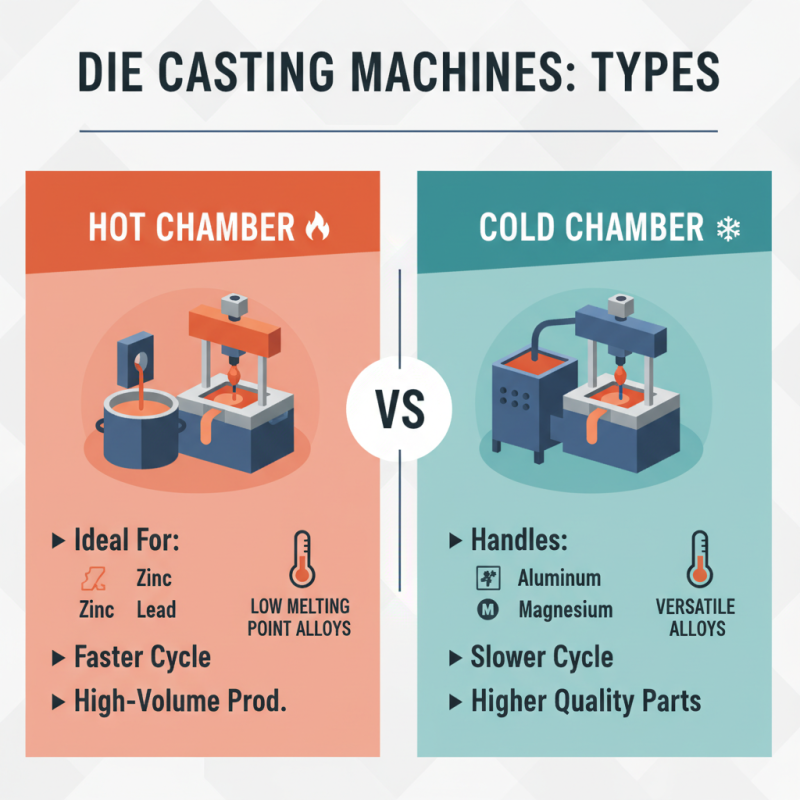
When choosing a die casting machine, it is essential to understand the different types available. There are several categories. The most common include hot chamber and cold chamber machines. Hot chamber machines are ideal for zinc and lead alloys. They operate faster, making them suitable for high-volume production. However, their use is limited to materials with low melting points. Cold chamber machines, on the other hand, are versatile. They can handle aluminum and magnesium alloys. They tend to be slower but produce higher quality parts.
In 2021, the global die casting market was valued at approximately $12 billion. This figure is expected to grow. The automotive industry drives much of this demand. Car manufacturers require precise and durable components. A recent report highlights that nearly 40% of die casting is used for automotive parts. This underscores the importance of choosing the right machine. Selecting a machine that doesn't match production needs can lead to inefficiencies. It's crucial to analyze the production volume and material types before making a decision.
Consider the application as well. For instance, aerospace and medical industries require stringent quality standards. The right die casting machine must meet these regulations. Some companies struggle with this aspect. They invest in machines that cannot handle high precision, resulting in defects. Misalignment in expectations can lead to costly rework and delays. Understanding these nuances can greatly impact production success.
Understanding Production Volume Requirements for Die Casting
Choosing the right die casting machine relies heavily on understanding your production volume needs. Different projects require different machines. A company producing high volumes will benefit from larger machines, while smaller operations may only need compact models. According to industry studies, production rates can range from 100 to over 1000 units per hour based on machine size and complexity.
Tip: Assess your average monthly production to help determine the right machine size. If your output fluctuates, consider machines with flexible operational capabilities.
Understanding production demands helps guide machine selection. A report from the Metal Foundry Trade Association shows that over 70% of manufacturers adjust their machine usage based on changing demands. It underscores the importance of having machines that can adapt quickly. Companies must also reflect on maintenance and downtime. Often, unexpected delays can be costly.
Tip: Create a production forecast for at least one year. This allows you to identify spikes or slow periods. Evaluating your future needs is crucial for optimal investment.
Key Technical Specifications to Evaluate in Die Casting Machines
When choosing a die casting machine, technical specifications play a crucial role. First, consider the clamping force. This determines how tightly the mold holds its shape during casting. A machine with insufficient clamping force might lead to defects in the final product. Ensure the force matches your material and part complexity.
Next, examine the injection system. The type of injection—hot chamber or cold chamber—affects the materials you can use. Hot chamber machines work well with low melting point metals. However, if you need to cast higher melting alloys, a cold chamber system is essential. Both systems have their pros and cons.
Cycle time is another vital spec. A fast cycle leads to higher productivity, but too quick may compromise quality. Aim for a balance that maximizes efficiency without sacrificing the integrity of the cast parts. Remember, it's worth reflecting on your specific needs and processes. Finding the perfect fit can be challenging and may require adjustments along the way.
Budgeting and Cost Analysis for Die Casting Machinery Investment
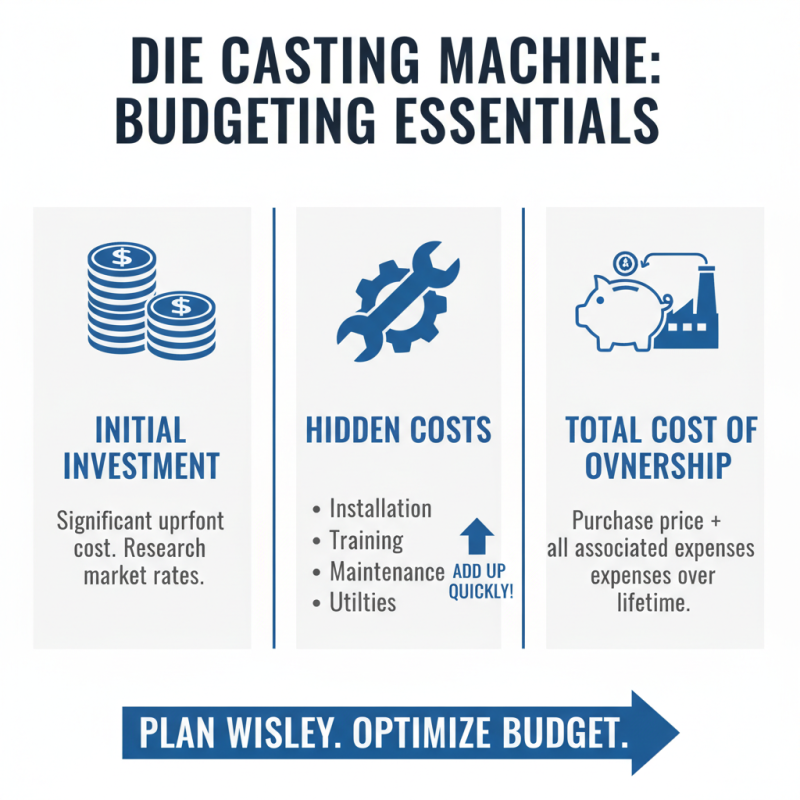
When considering a die casting machine, budgeting is crucial. The initial investment is significant. Research market rates to ensure you allocate funds wisely. Look for hidden costs. Installation, training, and maintenance can add up quickly. Consider the total cost of ownership, not just the purchase price.
Tips: Always compare quotes from various suppliers. This helps in understanding price variations. Don’t skip over delivery charges. Also, factor in the cost of energy consumption over time.
Evaluate your production needs. This will guide your machine choice and budget. A larger capacity may require more upfront cost but can boost efficiency. Aim for machines that provide the best return on investment. However, balancing power and precision is essential. Sometimes, bigger isn't always better.
Tips: Keep an eye on technological advancements. They may offer better efficiency at a similar cost. Regularly assess your equipment against evolving market standards. Staying updated is important for long-term sustainability.