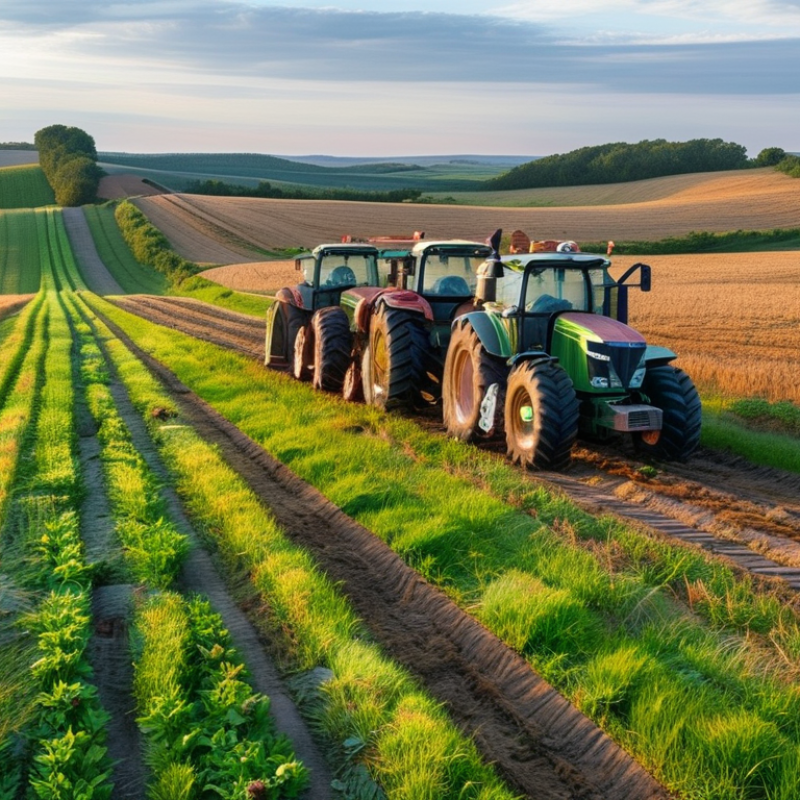
2026 Guide to Choosing the Best Agricultural Tyres for Your Needs
Choosing the right Agricultural Tyres can significantly impact farm efficiency and productivity. With various options available, selecting the best fit requires careful consideration of your specific needs and conditions.
Farm operations demand reliable equipment, especially during peak seasons. Proper Agricultural Tyres enhance traction, stability, and reduce soil compaction. However, many farmers overlook the long-term effects of their tyre choices.
A mismatch in tyre specifications can lead to increased operational costs and decreased performance. Understanding the unique requirements of your farming practices is crucial. Take the time to assess the terrain, machinery, and load capacities. Your choice of Agricultural Tyres can make or break your success in the field. Reflect on how the right tyres can optimize productivity and save you resources in the long run.
Understanding Agricultural Tyre Types: Bias vs. Radial Tyres
When choosing agricultural tyres, understanding the difference between bias and radial tyres is crucial. Bias tyres feature layers of fabric that cross each other at angles. This design offers reinforced sidewalls, making them ideal for handling heavy loads. They provide better traction on softer terrains, like muddy fields. However, bias tyres can heat up quickly during long hauls, leading to faster wear.
Radial tyres, on the other hand, have steel belts running parallel to the tyre's direction. This construction allows for better flexibility and heat dissipation. They excel in fuel efficiency, especially on hard surfaces. Farmers might appreciate their longevity and reduced rolling resistance. Yet, radial tyres can be more expensive upfront and might not perform as well in exceptionally muddy conditions.
Deciding between these two types requires thoughtful consideration of your farming practices. Think about the terrain you work on most often. What is your budget? How often do you replace tyres? Each choice carries advantages and drawbacks. Reflecting on these details will help ensure you select the right tyres for your needs.
Evaluating Load Capacity and Its Impact on Farm Operations
Load capacity is a critical factor in agricultural tyre selection. It directly influences the efficiency of farm operations. Research indicates that improper load capacity can lead to decreased fuel efficiency and increased soil compaction. According to the International Journal of Agricultural Engineering, tyres with inadequate load ratings can result in soil degradation over time. This can hinder crop yield and negatively impact farm sustainability.
Farmers must consider their equipment and operational needs when selecting tyres. A study from the Agricultural Research Service found that appropriately rated tyres enhance traction and stability. For instance, a tractor operating at maximum load requires tyres with a capacity that exceeds the weight it carries. This ensures optimal performance and reduces wear on both the tyres and the vehicle.
While it may be tempting to select lower-rated tyres to save costs, this can be a false economy. Investing in tyres with the right load capacity contributes to longer-lasting equipment and improved agricultural outcomes. Occasionally, farmers may underestimate the importance of matching tyre specifications to load conditions, leading to operational inefficiencies and unexpected repairs. This highlights the need for thoughtful tyre selection in achieving operational success.
2026 Guide to Choosing the Best Agricultural Tyres for Your Needs
This chart evaluates the load capacity of different tire types and its impact on farm operations. Understanding the appropriate load capacity is crucial for optimizing efficiency and ensuring safety in agricultural tasks.
Tread Patterns: Importance for Traction and Soil Health
Tread patterns on agricultural tyres play a crucial role in traction and soil health. Different patterns provide varying levels of grip on different terrains. A deep lug design enhances traction in muddy conditions, while a smoother tread can reduce soil compaction. This is important for crop yields, as soil health is affected by how tyres interact with the ground.
Choosing the right tread pattern requires careful consideration. Farmers must evaluate their specific needs. It’s not just about traction; the effects on topsoil and root systems matter too. A pattern that excels in one condition may falter in another. For instance, a tyre that grips well on wet surfaces might compact the soil, affecting crop growth.
Observing how your tyres perform under real conditions is essential. Keep track of wear patterns and soil quality over time. Small changes can lead to significant impacts. Understanding these dynamics can guide better decisions for your agricultural operations. Tyre choice is not a one-size-fits-all solution; it involves trial and evaluation.
Factors Influencing Tyre Size Selection for Different Equipment
Selecting the right agricultural tyre size is crucial. Several factors influence this decision. Equipment type, load capacity, and operating conditions play vital roles. A recent report indicated that inappropriate tyre sizing can reduce fuel efficiency by up to 20%. This inefficiency leads to higher operational costs, which can significantly impact farm profitability.
Soil type is another important consideration. For instance, softer soils require wider tyres to distribute weight effectively. Wider tyres can reduce soil compaction. A study showed that using the correct tyre width improved crop yields by as much as 15%. However, farmers should balance tyre width with the need for traction on firmer surfaces.
Tyre pressure is often overlooked but is essential for optimum performance. Over-inflated tyres can lead to uneven wear. This results in a higher frequency of replacements. In contrast, under-inflated tyres can compromise stability and control. Data suggests that maintaining correct tyre pressure can enhance service life by 30%. Each decision regarding tyre size and specifications must consider the unique needs of the farm and its machinery.
The Role of Tyre Maintenance in Enhancing Longevity and Performance
Tyre maintenance plays a crucial role in maximizing the lifespan and efficiency of agricultural tyres. Regular inspections help identify early wear and potential issues. A simple visual check can reveal irregular tread wear or punctures. Adjusting air pressure is vital. Too much or too little air can affect traction and reduce longevity. Maintaining proper inflation can prevent unnecessary stress on the tyre and enhance performance.
Cleaning agricultural tyres is often overlooked. Dirt and debris can cause damage over time. Regular cleaning not only improves appearance but also helps identify cracks or cuts. Additionally, rotating tyres can promote even wear. This practice extends overall life and improves handling. Operators may ignore this step, but it is essential for consistent performance.
Farmers should consider the conditions in which they operate. Different terrains and loads require specific tyre adjustments. Educating oneself about different maintenance practices can prevent costly mistakes. It’s easy to overlook these details, yet they directly impact efficiency. Over time, neglected tyres can lead to diminished yields. Awareness and proactive care significantly enhance performance and longevity.