Top 10 Metal Parts Manufacturing Techniques for Efficient Production

In today's competitive market, efficient metal parts manufacturing is crucial. Industries demand precision and speed in producing components. Metal parts play a significant role across various sectors, from automotive to aerospace.

Understanding the top manufacturing techniques is essential for success. Each method has its strengths. For example, additive manufacturing offers design flexibility, while CNC machining delivers high precision. However, challenges like cost and material waste exist in every technique.

Evaluating these options can be daunting. Companies may struggle to choose the right method for their needs. Nonetheless, a well-informed decision can lead to improved productivity and reduced lead times. Metal parts manufacturing continues to evolve, and staying updated is vital for any manufacturer aiming for excellence.
Top 10 Metal Parts Manufacturing Techniques for Efficient Production

Top 10 Metal Parts Manufacturing Techniques for Efficient Production

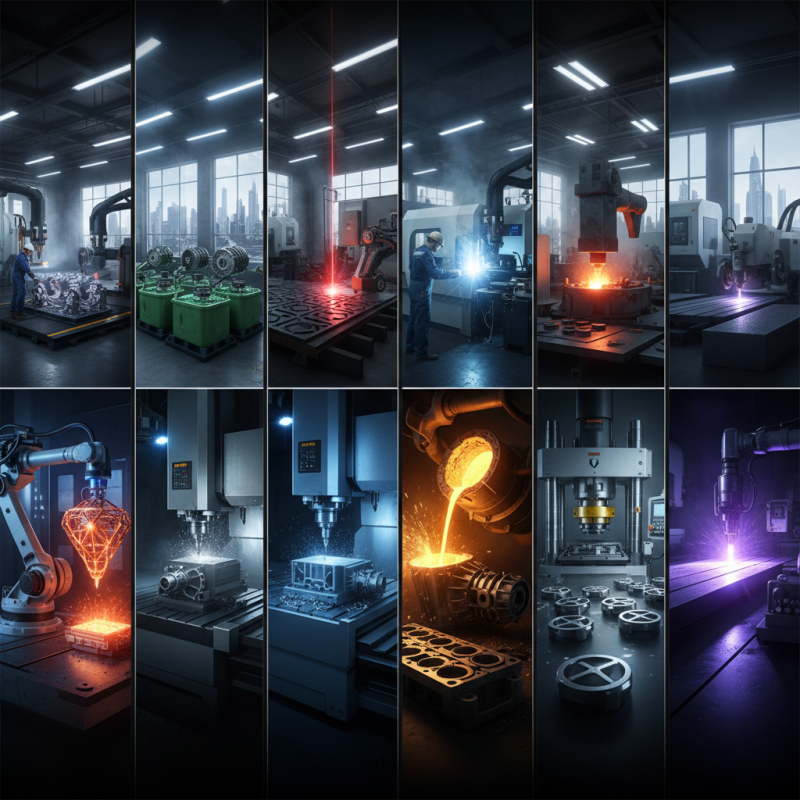
Manufacturing metal parts efficiently requires a variety of techniques. Each method has its strengths and weaknesses. A careful analysis can reveal the most effective choices. For instance, machining is precise, yet it can be time-consuming. It’s important to balance speed and accuracy.


Additive manufacturing, often called 3D printing, offers flexibility. It reduces waste and allows complex shapes. However, the surface finish may not meet some standards. Understanding these trade-offs is crucial for any production line. Die casting, on the other hand, speeds up mass production. Yet, it limits design variations. Companies often face challenges when optimizing these methods.


In many cases, the choice boils down to cost versus quality. Automation can enhance efficiency but requires upfront investment. Training staff is another hurdle. New technologies mean new skills. Adapting to these changes isn’t always smooth. Reflection on past mistakes helps in making better choices for the future. Each technique has potential but requires thoughtful implementation.

Overview of Metal Parts Manufacturing: Key Techniques and Trends

The metal parts manufacturing sector has seen significant advancements in recent years. Key techniques, such as additive manufacturing and CNC machining, have transformed traditional methods. According to a recent market analysis by Industry Insights, the global CNC machining market is projected to reach $100 billion by 2025. This reflects the growing reliance on precision-engineered components.

Additive manufacturing, or 3D printing, is also gaining traction. A Deloitte report indicates that this method could reduce production costs by 30% in some cases. However, companies must adapt to technical challenges. For example, material selection remains critical. Not all metals are suitable for additive processes.

There’s a need for continuous improvement in quality control. Many manufacturers still struggle with maintaining consistent standards. A survey by the Manufacturing Institute revealed that 47% of manufacturers noted issues with product defects. It highlights an area where the industry can improve. Investing in better inspection techniques could enhance reliability and efficiency.

Precision Machining: Enhancing Accuracy with CNC Technology

Precision machining has transformed metal parts manufacturing, primarily through the adoption of CNC (Computer Numerical Control) technology. According to a study by the Association for Manufacturing Technology, CNC production can enhance accuracy by up to 50%. This improvement is critical in sectors like aerospace and automotive, where every millimeter counts. CNC machines operate on digitally encoded specifications, resulting in consistent quality and repeatability. However, there can be challenges in establishing these systems correctly and ensuring skilled operators.

Despite the advancements, some issues persist. Program errors or misalignments can lead to defects that are difficult to trace. A survey from the National Institute of Standards and Technology noted that nearly 30% of CNC machining errors stem from human oversight. Operators must be constantly trained to minimize these mistakes. Adapting to ongoing changes in technology also presents hurdles; not all technicians are updated on the latest programming languages and tools.

Moreover, as manufacturers strive for greater efficiency, they often face financial constraints. A report from Deloitte highlights that 40% of small to medium-sized enterprises feel pressured to balance high-tech investments with cost-effective operations. Overall, while CNC technology boosts accuracy and efficiency, addressing lingering challenges is vital for maximizing its potential in the metal parts manufacturing industry.

Top 10 Metal Parts Manufacturing Techniques for Efficient Production

Technique Description Advantages Typical Applications
CNC Machining Computer Numerical Control machining enables precise and automated fabrication of parts. High precision, repeatability, and efficiency. Aerospace, automotive components.
3D Printing Additive manufacturing that builds parts layer by layer. Complex geometries and reduced material waste. Custom tooling, prototypes.
Injection Molding Process for creating parts by injecting material into a mold. High production speed and part consistency. Plastic and metal part production.
Laser Cutting Using lasers to cut materials with high precision. Highly accurate cuts with minimal kerf. Sheet metal processing, sign making.
Stamping Forming parts by applying pressure to sheet metal. High-volume output with consistent quality. Automotive and appliance industries.
Metal Extrusion Forcing material through a die to create long shapes. Efficient for producing uniform cross-sections. Bars, tubes, and complex profiles.
Forging Shaping metal using localized compressive forces. Enhanced strength and consistency in materials. Aircraft parts, automotive parts.
Welding Joining materials by melting and fusing them together. Strong joints and versatile applications. Construction, automotive, and industrial applications.
Surface Treatment Enhancing the properties of surfaces through various methods. Increased corrosion resistance and surface finish. Machined part finishing, automotive coatings.
Casting Pouring liquid metal into molds to create shape. Flexible designs and efficient bulk production. Pipes, engine blocks, and household items.

Additive Manufacturing: Revolutionizing Metal Parts Production

Top 10 Metal Parts Manufacturing Techniques for Efficient Production

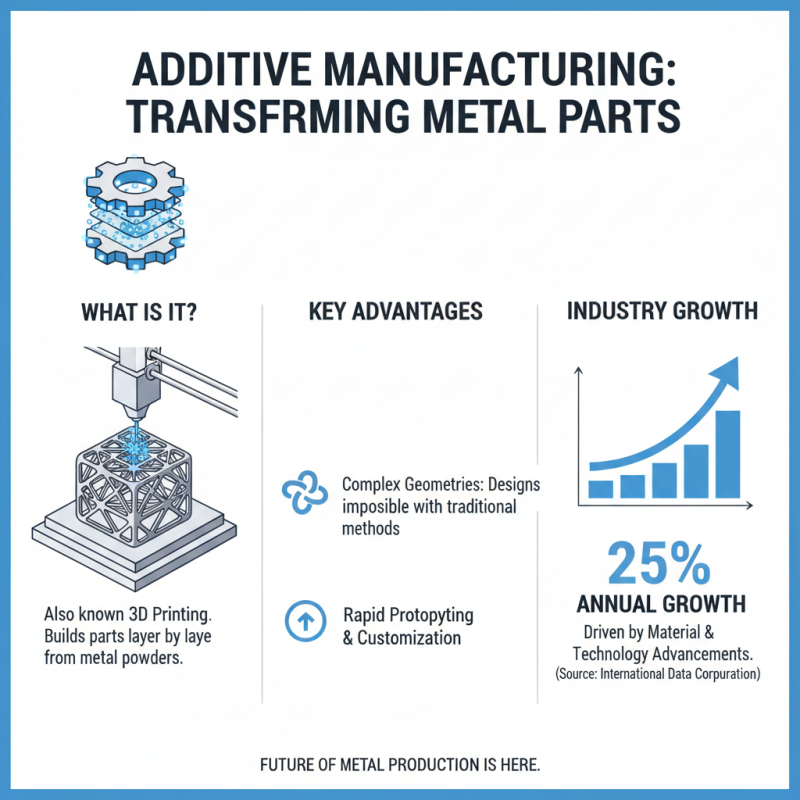
Additive manufacturing (AM) is transforming the landscape of metal parts production. This technique, often referred to as 3D printing, allows for complex geometries that traditional processes struggle to achieve. A recent report from the International Data Corporation states that the additive manufacturing industry is expected to grow by 25% annually. This is largely driven by advancements in materials and technology.

AM enhances efficiency. It reduces waste, which is critical in metalworking. Traditional subtractive methods can waste up to 90% of materials. In contrast, AM only uses the materials needed. High-precision parts can be produced quickly. For example, some manufacturers report lead times reduced by 50%. However, the process is not without challenges. Not all materials are compatible with AM techniques, and quality control remains a significant concern.

Industry experts highlight that while AM is promising, there are limitations. The technology still requires further development for high-volume production. Additionally, training personnel on new systems is essential. The transition can be costly and time-consuming. Many manufacturers are still evaluating whether the benefits outweigh the obstacles. Despite these issues, additive manufacturing is undeniably forging a path toward a more efficient future in metal parts production.

Casting Techniques: Analyzing Investment, Die, and Sand Casting Methods

Top 10 Metal Parts Manufacturing Techniques for Efficient Production

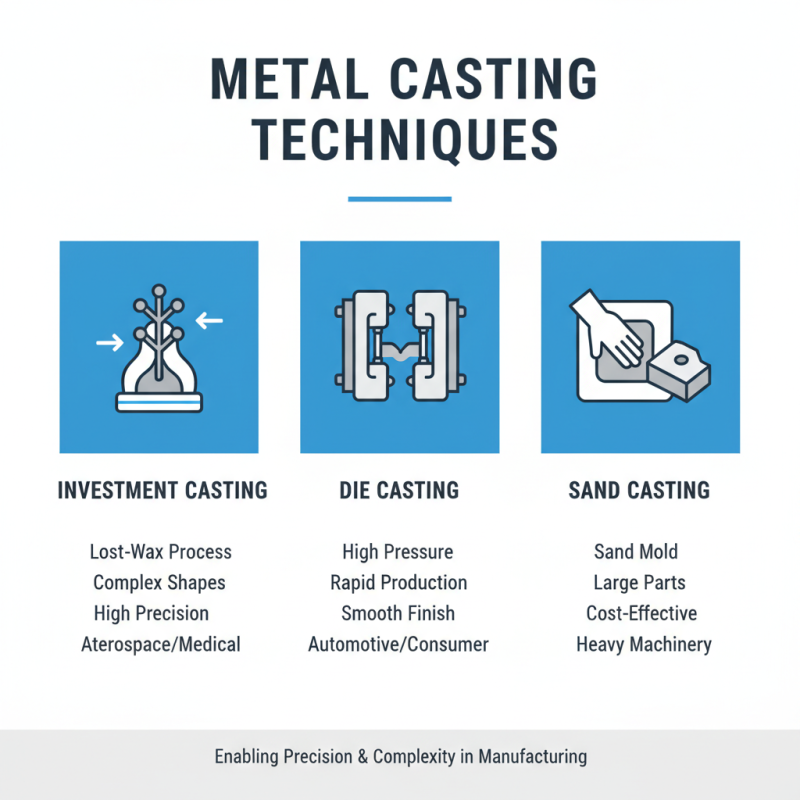
Casting techniques are essential for metal part manufacturing. They enable the creation of complex shapes with precision. Three main methods are common: investment casting, die casting, and sand casting.

Investment casting is known for its accuracy. A wax pattern forms the mold. However, it involves a longer production time. This method suits small, intricate parts. Yet, the cost can escalate with high-quality requirements.

Die casting is faster and efficient for mass production. Liquid metal is injected into molds. This technique allows uniformity in parts. But it may struggle with very complex designs. Sand casting, on the other hand, provides versatility. It uses sand to create molds. This method is low-cost but may lead to surface imperfections. Each technique has strengths and weaknesses. Manufacturers must choose carefully based on needs.

Conclusion

The article "Top 10 Metal Parts Manufacturing Techniques for Efficient Production" provides a comprehensive overview of essential techniques and emerging trends in the metal parts manufacturing industry. It emphasizes the significance of precision machining, particularly the role of CNC technology in enhancing accuracy and efficiency. Additionally, it explores the transformative impact of additive manufacturing, which is reshaping how metal parts are produced through innovative methods.

Furthermore, the article delves into various casting techniques, including investment, die, and sand casting, analyzing their advantages for different production needs. It also discusses the importance of joining methods, such as welding and riveting, that contribute to overall production efficiency. By collectively examining these techniques, the article illustrates how advancements in metal parts manufacturing are driving the industry towards greater effectiveness and innovation.
Warning!

You are using an outdated browser. Things may not appear as intended. We recommend updating your browser to the latest version.

Close