Top 10 Water Treatment Equipment Suppliers Worldwide
Choosing the right Water Treatment Equipment supplier affects water quality, operating costs, and long-term system reliability. This guide introduces ten established suppliers serving municipal, industrial, commercial, and decentralized water projects worldwide. Their solutions may include filtration units, membrane systems, ultraviolet disinfection, chemical dosing equipment, pumps, monitoring instruments, and complete treatment plants.
Performance matters. Yet a large global presence does not guarantee the best fit for every site. We assess suppliers through practical criteria, including engineering experience, product range, after-sales support, documented performance, energy efficiency, and maintenance requirements. Technical credibility also depends on transparent specifications, independent testing, trained service teams, and compliance with relevant regional standards. A system treating brackish water in a coastal factory may need different equipment from a compact plant serving a rural community. That difference is easy to overlook.
This ranking is not absolute. Project conditions, local water chemistry, budget limits, and operator skills can change the final decision. Some suppliers may excel in advanced membrane technology, while others offer stronger support for pumps, automation, or packaged systems. Buyers should verify flow rates, recovery ratios, replacement intervals, warranty terms, and available spare parts before signing contracts. Real-world results often depend on installation quality and daily maintenance, not only on brand reputation. The information should therefore support careful comparison rather than replace professional consultation. That is the honest limitation. Reliable decisions require site testing, clear documentation, and realistic lifecycle calculations.
Water Treatment Equipment: Types, Functions, and Global Scope
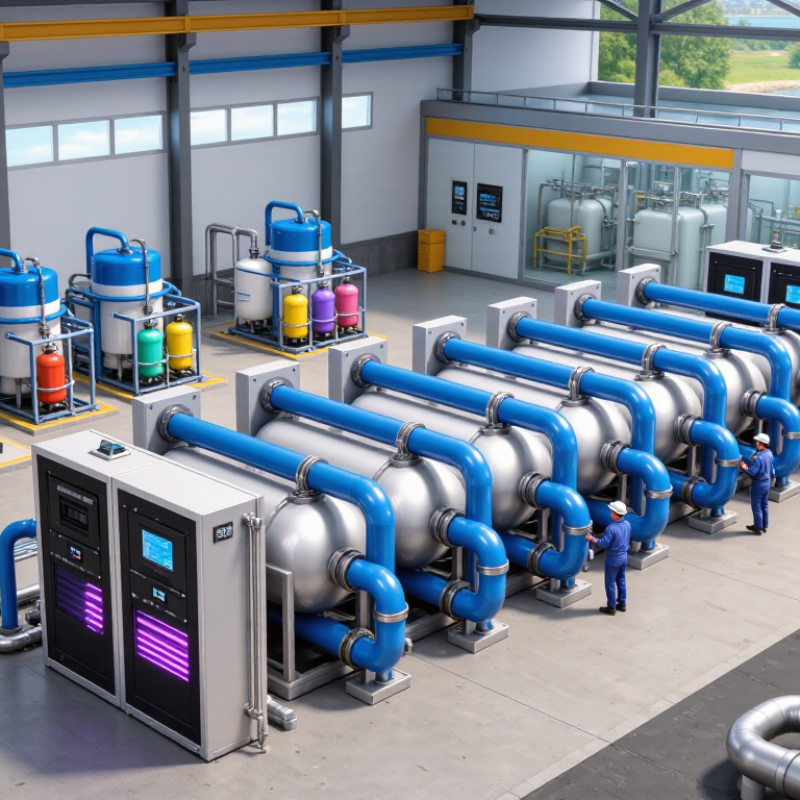
Water treatment equipment converts uncertain water quality into controlled, usable water. Common systems include screening units, coagulation tanks, membrane filters, activated carbon vessels, ultraviolet reactors, and sludge dewatering presses. Each solves a different problem. Screens remove debris, while membranes separate dissolved salts, microbes, and fine particles. Carbon can reduce taste, odor, and some organic compounds. Ultraviolet treatment disinfects water without adding chemical residue.
Selection should begin with testing, not equipment catalogs. A laboratory report may show turbidity, hardness, salinity, metals, and microbial levels. Operators then match flow rate, pressure, energy demand, and maintenance skills to the site. In a coastal plant, reverse osmosis may handle saline feedwater, but pretreatment protects its membranes from fouling. In a small rural facility, simpler filtration may prove more dependable.
Small details matter. A blocked pressure gauge can delay a correct decision.
The global market covers municipal plants, factories, hospitals, hotels, farms, and emergency installations. Suppliers commonly provide modular skids, dosing systems, control panels, spare parts, and technical training. Reliable suppliers explain performance limits and provide operating data instead of promising perfect results.
Local climate also changes equipment behavior; cold water can reduce membrane output, while dusty environments can increase filter maintenance. Some specifications look convincing but remain incomplete. Real performance depends on installation quality, trained operators, replacement schedules, and honest monitoring. That is where many projects become less polished than planned.
Criteria for Ranking the Leading International Suppliers
Ranking the top 10 water treatment equipment suppliers worldwide requires more than comparing product catalogs. A credible assessment examines verified project experience across municipal, industrial, and remote sites. Suppliers with decades of field exposure often understand seasonal water changes, membrane fouling, and difficult installation conditions. However, age alone proves little.
Technical capability should carry significant weight. Review treatment performance, energy consumption, automation, maintenance access, and compatibility with local water chemistry. Independent certifications, laboratory data, and documented compliance support professional credibility. Strong suppliers also provide clear warranties, operator training, spare-parts planning, and responsive service across borders. A low purchase price can become expensive when replacement parts arrive slowly.
Tips: Request references from facilities with similar flow rates and contaminants. Ask for measured results, not polished promises. Check commissioning records and service response times. Compare total lifecycle cost, including chemicals, power, labor, and disposal. Ranking can still be imperfect because suppliers report data differently, and site conditions rarely match perfectly. That uncertainty deserves honest attention.
Top 10 Water Treatment Equipment Suppliers Worldwide — Criteria for Ranking the Leading International Suppliers
Comparative assessment based on international market reach, solution breadth, project capability, service coverage, compliance evidence, and sustainability transparency.
| Rank | Anonymous Supplier Profile | Primary Operating Region | Core Equipment Coverage | International Reach | Compliance Evidence | Lifecycle Service | Sustainability Reporting | Overall Score |
| 1 | International Supplier Profile 01 | North America & Europe | Membrane systems, clarification, filtration, disinfection, digital monitoring | Very high | Extensive | Global service network | Detailed |
94 |
| 2 | International Supplier Profile 02 | Europe & Asia-Pacific | Industrial wastewater, biological treatment, sludge handling, reuse systems | Very high | Extensive | Global service network | Detailed |
92 |
| 3 | International Supplier Profile 03 | Europe & Middle East | Municipal treatment, desalination, reverse osmosis, advanced oxidation | Very high | Extensive | Strong regional coverage | Detailed |
90 |
| 4 | International Supplier Profile 04 | Asia-Pacific & North America | Ultrafiltration, nanofiltration, reverse osmosis, packaged treatment plants | High | Extensive | Strong regional coverage | Detailed |
88 |
| 5 | International Supplier Profile 05 | North America & Latin America | Water reuse, desalination, ion exchange, chemical dosing, controls | High | Extensive | Global service network | Established |
86 |
| 6 | International Supplier Profile 06 | Europe & Africa | Clarifiers, dissolved air flotation, biological systems, sludge dewatering | High | Extensive | Strong regional coverage | Established |
84 |
| 7 | International Supplier Profile 07 | Asia-Pacific & Middle East | Containerized plants, membrane bioreactors, filtration, seawater treatment | High | Extensive | Regional service network | Established |
82 |
| 8 | International Supplier Profile 08 | Europe & Latin America | Process water, wastewater polishing, disinfection, water quality monitoring | High | Strong | Regional service network | Established |
80 |
| 9 | International Supplier Profile 09 | North America & Asia-Pacific | Industrial filtration, softening, demineralization, ultraviolet disinfection | Moderate-high | Strong | Regional service network | Basic-to-established |
78 |
| 10 | International Supplier Profile 10 | Middle East & Africa | Desalination pretreatment, reverse osmosis, brine management, pumping systems | Moderate-high | Strong | Regional service network | Basic-to-established |
76 |
Core Technologies and Solutions Offered by Each Supplier
Top 10 Water Treatment Equipment Suppliers Worldwide represent a broad range of treatment expertise. Their core technologies include screening, clarification, filtration, membrane separation, disinfection, and sludge handling.
One supplier focuses on coarse screens, grit removal, and compact preliminary treatment systems. Another provides dissolved air flotation units for removing oils, suspended solids, and algae. A filtration specialist supplies multimedia filters, cartridge housings, and automatic backwash controls. Membrane experts offer ultrafiltration and reverse osmosis skids for drinking water, process water, and reuse projects. Energy efficiency remains important. Variable-speed pumps can reduce operating costs, although savings depend on system design.
Some suppliers combine biological treatment with modular containerized plants. These systems suit remote facilities, construction sites, and small communities. Another group develops ultraviolet reactors and ozone generators for microbial control and advanced oxidation. Chemical dosing specialists provide metering pumps, analyzers, and automated pH correction. Sludge equipment suppliers use belt presses, screw presses, or centrifuges to reduce water content. One engineering supplier integrates sensors, supervisory software, and remote alarms for continuous monitoring.
Small details matter. A final supplier concentrates on wastewater reuse, polishing treated effluent through membranes, activated carbon, and disinfection. Field experience shows that equipment performance depends heavily on pretreatment and maintenance. A technically impressive system may fail when operators lack training or spare parts. Supplier comparisons should examine verified flow rates, energy use, material compatibility, service response, and lifecycle costs. Specifications can look perfect on paper. Real water is less cooperative.