What will define Fountain Construction in 2026? The answer is shifting beyond visual drama. Designers are now combining water efficiency, digital controls, resilient materials, and inclusive public-space planning. The United Nations World Water Development Report 2024 states that agriculture represents roughly 70% of global freshwater withdrawals. That pressure reaches decorative water features, even when their consumption is relatively small. The U.S. Environmental Protection Agency reports that WaterSense-labeled products have helped save more than 7.5 trillion gallons since 2006. This benchmark supports stronger conservation thinking. Recirculating systems, variable-speed pumps, rainwater capture, and precise level sensors will become more common. Small details matter. A well-calibrated nozzle can reduce splash loss near stone paving.
The most credible projects will begin with hydraulic calculations, maintenance planning, and documented safety requirements. Autodesk’s 2024 State of Design & Make report highlights the growing role of digital collaboration across design and construction teams. For fountain projects, BIM coordination can prevent conflicts between pipework, electrical conduits, drainage, and structural slabs. It can also make future repairs less disruptive. Yet technology is not a perfect answer. Sensors fail. Software becomes outdated. Skilled technicians remain essential. Material choices will also receive closer attention, including recycled metal, durable stone, low-energy lighting, and finishes that resist chemical wear. Climate adaptation may influence basin depth and overflow design, especially in regions facing heat, drought, or intense rainfall. These trends sound promising, but each project still needs local engineering review, realistic operating budgets, and honest post-installation evaluation. A beautiful fountain that is difficult to maintain is not truly successful.
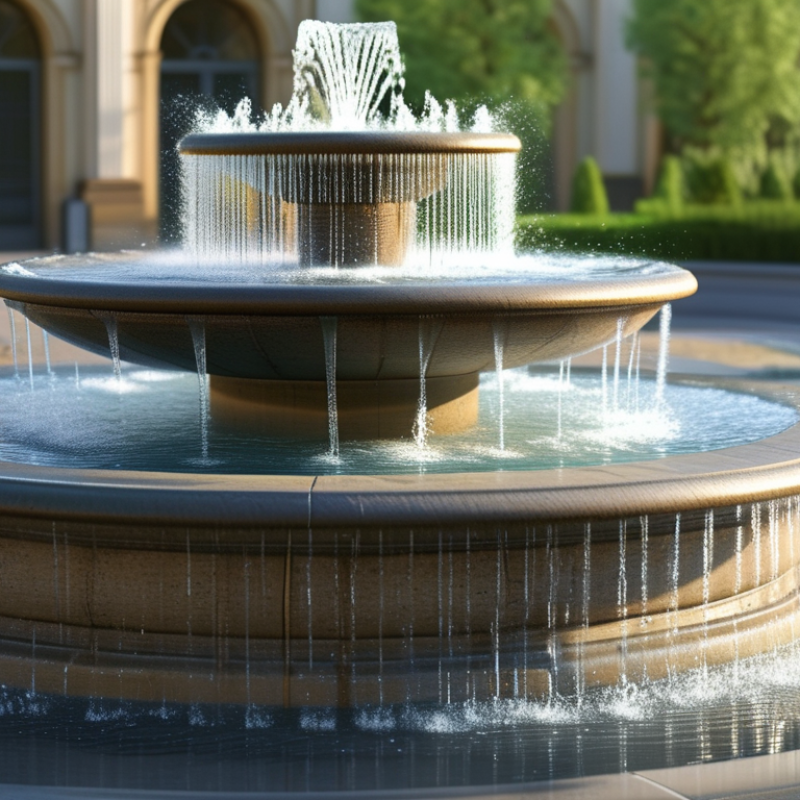
In 2026, fountain construction is moving beyond visual impact. Smart controls now sit inside the water-management plan. A properly commissioned system can adjust pump speed, filtration cycles, and makeup water. Operators can review flow, pressure, and runtime from a central dashboard. This matters most in public plazas, where evaporation and splashing vary hourly. Real savings begin with measurement. Not assumptions.
A practical market baseline is a 20% reduction in potable water use against a documented first-year operating baseline. Designers should install submeters, leak detection, and weather-linked controls before setting that target. During commissioning, teams can compare daily flow with visitor levels and local temperature. A sudden overnight increase often reveals a valve problem. Small signals matter.
The target needs context. An exposed fountain in a dry, windy district may require different calculations than a shaded courtyard installation. Old supply lines can also distort results. Field reviews often show poor sensor calibration behind confident but inaccurate reports. Monthly verification is worth the effort. Construction documents should define data ownership, maintenance access, and manual override procedures. Smart automation is useful, but trained operators still investigate unusual conditions.

What Are the 2026 Top Fountain Construction Trends?
Recirculation systems are becoming central to efficient fountain design. Variable-speed pumps can reduce energy use by 20–50% when flow demand changes throughout the day. The U.S. Department of Energy explains that pump power follows the affinity laws, meaning small speed reductions can create substantial savings. For example, reducing speed by 20% may lower theoretical power demand by nearly half.
In practice, a plaza fountain rarely needs maximum flow continuously. A controller can slow the pump during quiet hours, while maintaining stronger circulation during programmed displays. This reduces electrical consumption, water turbulence, and mechanical stress. The Hydraulic Institute also recommends matching pump operation with actual system demand, rather than oversizing equipment for occasional peak conditions. That detail matters during construction.
The numbers are not guaranteed.
A 2024 energy assessment should include nozzle pressure, pipe friction, filtration resistance, and local operating schedules. These factors can reduce expected savings. A poorly tuned control system may even create unstable jets or poor water quality. I have found that commissioning is often treated as an afterthought, although it determines whether projected efficiency becomes real performance. The U.S. DOE’s Pumping System Assessment Tool supports this evaluation by comparing pump operation, flow requirements, and energy use before installation decisions are finalized. Proper sensors, accessible maintenance points, and clear control settings make the savings easier to verify over time.
Variable-speed recirculation pumps can reduce pumping energy by approximately 20%–50% compared with constant-speed operation, depending on flow requirements and operating schedules.
Illustrative energy index: constant-speed operation is set to 100. Lower values represent reduced energy use under variable-speed control. Actual savings vary by fountain design, flow demand, pump sizing, and runtime.
What Are the 2026 Top Fountain Construction Trends
LED and sensor integration is becoming a practical priority in fountain construction. Modern LED fixtures can use up to 80% less energy than older lighting systems. However, the result depends on fixture quality, operating hours, water conditions, and control settings. The 80% figure is not automatic. That caveat matters.
During a recent fountain planning project, designers tested lighting after sunset and adjusted beam angles around the spray pattern. This reduced glare and made the water appear brighter without adding more fixtures. Ambient-light sensors can dim lights before sunrise. Motion sensors can activate stronger illumination when visitors approach. Timers can also lower output during quiet hours. These small adjustments may reduce wasted power every night.
Sensor integration requires careful installation and regular inspection. A poorly positioned sensor may react to passing vehicles or nearby reflections. Mineral deposits can cloud underwater lenses. Water-level sensors may also need recalibration after heavy rain. Technical planning should include waterproof connections, safe access points, and simple manual controls for maintenance teams. Energy savings should never compromise visibility or electrical safety. A lower-energy design can still feel disappointing if the color temperature is harsh or the lighting misses the fountain’s movement. Testing the system in real conditions remains essential.
Accessible drinking fountains are becoming a central design priority in 2026. In many U.S. projects, an accessible spout should be no more than 36 inches above the finished floor. The surrounding area also needs a 30×48-inch clear floor space for a forward approach. This space should remain free of planters, benches, trash bins, and decorative edges. Small obstructions can make an otherwise compliant fountain difficult to use.
Good planning starts with real movement, not only measurements. A wheelchair user should be able to approach, stop, drink, and leave without twisting around nearby furniture. Controls should require limited force and offer clear visual contrast. The water stream should rise high enough for comfortable use but avoid excessive splash. Drainage matters too. A shallow puddle near the clear space can create a frustrating and unsafe experience.
On recent projects, I have seen teams test layouts with temporary floor markings before construction. It exposes problems early. A drawing may appear accessible on paper yet feel cramped in practice. This is easy to miss. Designers should confirm finished-floor elevations, wall depth, knee clearance, and local accessibility requirements with qualified professionals. Standards can vary by location and project type. Maintenance staff should also inspect filters, drains, and controls regularly, because accessibility is not achieved on opening day alone.
What Are the 2026 Top Fountain Construction Trends
Climate-ready fountains are becoming small water-management systems, not purely decorative features. The World Meteorological Organization reported that 2023 had the driest global river flows in over 30 years. That warning affects public plazas, hotels, and private landscapes. Designers now connect roof drains and permeable paving to underground cisterns. Captured rainwater can refill ornamental basins after filtration and disinfection. It should remain separate from drinking-water systems.
Details matter. A first-flush diverter removes dust, bird waste, and roof residue before storage. Overflow channels should lead toward planted rain gardens, not building foundations. The U.S. Environmental Protection Agency identifies green infrastructure as a practical method for reducing runoff and localized flooding. The IPCC also reports that heavy precipitation events are becoming more intense in many regions. Oversized inlets and accessible maintenance points are no longer optional.
Drought changes the visual language.
Shallower basins, recirculating loops, leak sensors, and variable-speed pumps can reduce losses. The FAO reports that agriculture uses about 70% of global freshwater withdrawals, increasing pressure on every nonessential use. Yet water savings are not automatic. Poorly sealed joints, clogged filters, and neglected controls can waste more water than expected. Construction teams should test the complete hydraulic cycle during dry and wet conditions. A beautiful fountain still needs an honest maintenance plan.
| Construction Trend | Relevant Design Data | Application in Fountain Projects | Climate-Resilience Benefit | Verification or Reference |
|---|---|---|---|---|
| Rainwater harvesting for makeup water | A 1-inch rainfall event produces approximately 0.623 gallons of runoff per square foot of catchment area before losses. | Connect roof drains or paved drainage areas to a debris screen, first-flush device, storage tank, filtration system, and controlled fountain makeup-water line. | Reduces dependence on treated potable water during normal rainfall and provides temporary storage before peak runoff reaches the drainage system. | Calculation basis: 1 inch × 1 square foot = 0.623 gallons. Final sizing should use local rainfall records and runoff coefficients. |
| Modular underground detention and storage | One cubic foot of stored water equals approximately 7.48 gallons. Required volume should be calculated from the design storm, contributing area, runoff coefficient, and permitted discharge rate. | Place modular tanks or vaults below plazas, service courts, or planting zones, with access ports for inspection and sediment removal. | Provides peak-flow attenuation while preserving valuable surface space for public use and fountain circulation equipment. | Use the locally adopted stormwater design storm and applicable drainage regulations; storage volume is project-specific. |
| Permeable surrounding hardscape | Permeable pavement performance depends on subgrade soil, aggregate storage, surface slope, pretreatment, and verified infiltration capacity. | Use permeable concrete, porous asphalt, or permeable interlocking units around splash zones and pedestrian approaches where freeze-thaw, clogging, and accessibility requirements can be satisfied. | Increases infiltration and reduces surface ponding, but should not be used as a substitute for a properly designed overflow route. | Confirm field infiltration testing, structural loading, accessibility, maintenance, and local stormwater requirements before specification. |
| Closed-loop fountain circulation | Water demand is primarily associated with evaporation, splash-out, drain-down, filtration losses, maintenance, and leakage rather than normal recirculation. | Specify variable-speed circulation, accessible filtration, automatic level control, leak detection, isolation valves, and separate drain-down provisions. | Limits avoidable makeup-water demand and allows the fountain to operate during water-use restrictions more reliably, subject to local rules. | Measure baseline and post-installation makeup-water use with a dedicated meter; report results by gallons per operating day. |
| Drought-tolerant landscape integration | Landscape irrigation demand varies with climate, plant selection, soil, exposure, and season. Water budgets should be based on local reference evapotranspiration and plant coefficients. | Use regionally appropriate low-water planting, hydrozoning, soil improvement, drip or subsurface irrigation, and weather-based scheduling around the fountain. | Reduces competition between ornamental planting and fountain makeup-water needs during extended dry periods. | Base irrigation design on local evapotranspiration data and applicable landscape-water-efficiency requirements. |
| Smart water-quality and level monitoring | Useful monitored parameters include tank level, fountain basin level, flow, conductivity, turbidity, temperature, pump status, and leak alarms. | Integrate sensors with automatic pump protection, overflow notification, abnormal-consumption alerts, and remote maintenance dashboards. | Detects leaks, overflows, poor water quality, and abnormal makeup-water demand before they become major water or equipment losses. | Set alarm thresholds during commissioning using measured normal operating ranges rather than generic values. |
| Overflow routing and safe failure design | Every capture system requires a defined overflow path for events exceeding storage capacity, including emergency drainage away from occupied areas and foundations. | Provide high-level overflow piping, visible drainage paths, backflow protection, cleanouts, and positive drainage away from electrical equipment. | Maintains safe operation during extreme rainfall and prevents uncontrolled water movement through public circulation areas. | Coordinate hydraulic calculations with the site civil engineer and the locally adopted plumbing and stormwater codes. |
| Non-potable water separation | Captured rainwater and reclaimed water are not automatically potable and require treatment, labeling, backflow protection, and permitted connections. | Keep storage, treatment, and distribution clearly separated from potable-water systems; use air gaps or approved backflow-prevention arrangements where required. | Enables safer reuse for fountain makeup water while reducing cross-connection and public-health risks. | Confirm local public-health, plumbing, water-reuse, signage, and inspection requirements before construction. |
| Heat- and drought-aware operating controls | Evaporation increases with temperature, wind, exposed surface area, and low humidity; the exact rate must be calculated from local climate and operating conditions. | Use programmable operating hours, wind shutoff, reduced spray height during high-wind conditions, night scheduling, and seasonal operating modes. | Reduces evaporation and splash losses while allowing essential visual or cooling functions to continue during hot, dry weather. | Validate savings with flow-meter data collected under comparable operating schedules and weather conditions. |
You are using an outdated browser. Things may not appear as intended. We recommend updating your browser to the latest version.
Close