2026 Top Chicken Cage Manure Belt Suppliers?

Choosing the right Chicken Cage Manure Belt supplier in 2026 requires more than comparing catalog prices. Belt thickness, seam quality, moisture resistance, and tracking accuracy directly affect daily labor. A reliable system should move manure evenly beneath every cage row, without slipping, tearing, or collecting at the discharge point. Small failures become expensive quickly.

Dr. Michael Czarick, a respected poultry housing specialist, offers a practical standard: “Good equipment must perform under real farm conditions.” That principle should guide every supplier comparison. Buyers should examine belt material, scraper design, drive rollers, cleaning access, and replacement availability. Ask for installation records from farms with similar flock sizes. Request measurable details, not broad promises. Photos help, but operating data matters more.

The strongest suppliers usually provide clear technical drawings, responsive service, and spare parts that arrive before a breakdown becomes serious. They also understand ventilation, manure moisture, cage layout, and worker safety. A belt that works in a showroom may struggle with wet manure, uneven loading, or winter temperatures. That weakness deserves attention.

No ranking is flawless. Supplier performance can vary by region, installer, and farm management. Therefore, this guide evaluates leading 2026 options through practical evidence, product consistency, service reliability, and long-term operating value. The goal is not to praise the cheapest offer. It is to identify equipment that keeps moving when the barn is busy, dusty, and far from perfect.
2026 Top Chicken Cage Manure Belt Suppliers?

What Are Chicken Cage Manure Belts and How Do They Work?

2026 Top Chicken Cage Manure Belt Suppliers?

What Are Chicken Cage Manure Belts and How Do They Work?

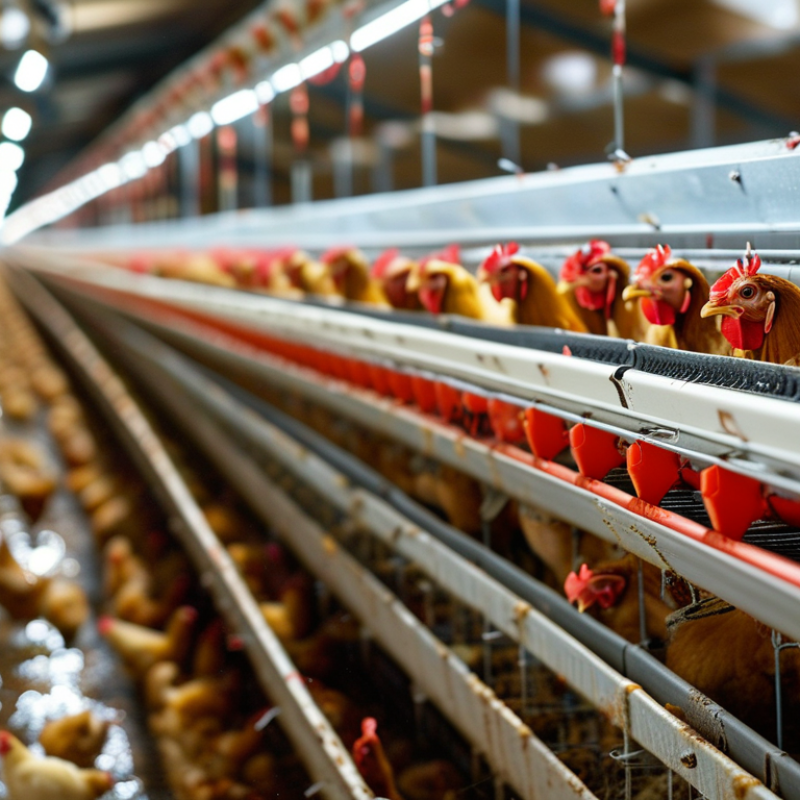
Chicken cage manure belts are continuous strips installed beneath tiered poultry cages. They collect droppings as birds remain above them. Most belts use durable polypropylene or polyethylene materials. These materials resist moisture, tearing, and repeated cleaning.

A motor moves each belt slowly toward one end of the house. A scraper then removes the manure into a storage area, trailer, or composting system. Some farms run the belts daily. Others operate them several times each week, depending on flock size and moisture levels. Drier manure usually means less odor and easier handling. Ventilation still matters. A belt cannot solve every air-quality problem.

In practical inspections, alignment deserves close attention. A belt that drifts sideways may rub against the frame and wear quickly. Excessive tension can damage bearings and drive parts. Loose tension may cause slipping. Operators should check belt edges, fasteners, rollers, and accumulated manure before each cycle. Keep it simple. Record problems early.

The best supplier should provide accurate belt dimensions, compatible drive components, installation guidance, and replacement support. Ask for material specifications and load recommendations. Cheap belts may appear attractive, but premature cracking can create expensive downtime. Even experienced teams sometimes overlook temperature changes or uneven loading. That mistake deserves review, not excuses. A reliable manure belt system depends on correct design, careful installation, and consistent maintenance.

Key Criteria for Evaluating Manure Belt Suppliers in 2026

When evaluating chicken cage manure belt suppliers in 2026, begin with operating evidence, not catalog photographs. USDA’s 2022 Census of Agriculture recorded about 9.1 billion broilers sold in the United States. Large-scale housing therefore needs belts designed for continuous loading, uneven moisture, and frequent cleaning. Ask suppliers for belt tensile strength, thickness tolerance, splice performance, and rated manure throughput. Request test records from comparable cage systems.

Material selection matters. Polypropylene and reinforced polymer belts can resist corrosion, but performance depends on temperature, tension, roller alignment, and manure moisture. FAO’s 2023 livestock emissions report estimated global livestock agrifood emissions at 6.2 gigatonnes of CO2 equivalent in 2015. Efficient manure removal can support better resource management, although a belt alone cannot solve farm-wide environmental problems. That point is easy to overlook.

Supplier evaluation should include spare-part availability, installation training, response times, warranty exclusions, and documented service cases. Inspect the belt edge, welds, drive rollers, and scraper contact points before signing. A low purchase price may hide costly downtime. I would also compare energy use and belt replacement intervals across at least three operating sites. My checklist is not perfect; local dust, humidity, and operator habits can change results. Reliable suppliers should admit those limitations and provide measurable field data, not vague promises.

Leading Chicken Cage Manure Belt Suppliers and Their Strengths

In 2026, leading chicken cage manure belt suppliers compete through practical strengths, not attractive claims alone. Experienced suppliers understand daily farm pressure, including moisture, ammonia, dust, and continuous belt movement. Their teams should recommend suitable belt widths, thicknesses, and connection methods for different cage systems. Ask for operating records.

Reliable suppliers use consistent materials and controlled production processes. Reinforced polypropylene belts can provide useful tensile strength and stable movement under regular loads. Good suppliers also inspect belt thickness, edge finish, joint quality, and dimensional accuracy before delivery. These details reduce slippage, tearing, and uneven manure removal. Clear technical drawings make installation easier for farm technicians.

After-sales support separates capable suppliers from ordinary sellers. Leading suppliers provide installation guidance, maintenance schedules, replacement parts, and practical responses to belt tracking problems. They may also offer customized lengths or punched configurations for existing equipment. However, no supplier is perfect. Some respond quickly before payment but slowly after installation, which can disrupt farm routines. Buyers should check warranty terms, service response times, sample quality, and references from comparable poultry farms. A small trial order can reveal more than a polished catalog. Suppliers that accept testing and discuss weaknesses often appear more trustworthy than those promising effortless performance.

2026 Top Chicken Cage Manure Belt Suppliers? - Leading Chicken Cage Manure Belt Suppliers and Their Strengths
Supplier Profile Primary Supply Region Typical Belt Material Common Belt Width Typical Thickness Typical Product Strength Best-Fit Farm Type Key Selection Consideration
Supplier Profile A East Asia Smooth PVC or polypropylene 500–2,500 mm 1.0–2.0 mm Broad cage-system compatibility and competitive high-volume production Large commercial layer houses Confirm belt dimensions, edge finish, and replacement-part availability
Supplier Profile B Western Europe Reinforced PVC with textured or smooth surface 600–2,200 mm 1.2–2.5 mm Strong dimensional consistency and options for automated manure removal lines High-automation farms Check integration with existing drive rollers and tensioning systems
Supplier Profile C North America Heavy-duty PVC or laminated polymer 600–2,400 mm 1.5–2.5 mm Emphasis on durability for long conveying distances and frequent cleaning Large and multi-level cage facilities Evaluate tensile strength, splice quality, and operating temperature range
Supplier Profile D Southeast Asia Polypropylene or flexible PVC 500–2,000 mm 1.0–2.0 mm Flexible customization for regional cage layouts and replacement projects Small to medium commercial farms Request sample rolls to verify flexibility, tracking, and resistance to cracking
Supplier Profile E South Asia PVC manure belt with reinforced edges 500–1,800 mm 1.0–1.8 mm Practical replacement solutions for standard H-type and A-type cages Growing layer operations Verify actual cage model, belt seam design, and delivery lead time
Supplier Profile F Middle East and North Africa UV-resistant PVC or polymer composite 500–2,000 mm 1.2–2.2 mm Material options suited to hot, dry environments and intensive ventilation Climate-controlled poultry houses Confirm UV resistance, heat tolerance, and storage requirements
Supplier Profile G Latin America Standard PVC or polypropylene 500–2,200 mm 1.0–2.2 mm Regional support for routine maintenance and retrofit installations Retrofit and replacement applications Compare local technical support, spare parts, and installation guidance
Supplier Profile H Global OEM-oriented supply Custom PVC, PP, or multilayer polymer Made-to-order, commonly 500–2,500 mm 1.0–2.5 mm Engineering support, custom dimensions, and integration with complete cage systems New-build automated projects Assess drawing approval, quality documentation, testing, and project support
Note: The profiles above are anonymized supplier categories rather than named companies or brands. Dimensions are typical industry ranges for chicken cage manure belts and should be confirmed against the cage model, operating environment, belt load, drive system, and supplier specification sheet before purchase.

How to Compare Manure Belt Materials, Designs, and Prices

2026 Top Chicken Cage Manure Belt Suppliers?

Comparing manure belt materials, designs, and prices requires more than reading a supplier’s catalog. Polypropylene belts are often light and flexible, while reinforced PVC options may resist stretching better. Check thickness, tensile strength, seam quality, and temperature tolerance. Ask for a physical sample. Details matter. A belt that feels smooth may still tear around cage-frame edges. Confirm whether the material tolerates moisture, ammonia, cleaning chemicals, and repeated scraping. These conditions affect service life inside a working poultry house.

Design also changes operating costs. A flat belt may suit standard cage layouts, while perforated belts can improve drainage in wetter manure systems. Inspect belt width, side alignment, splice construction, and roller compatibility. Request test data, installation guidance, and replacement-part availability. Price comparisons should include shipping, joining tools, fasteners, labor, and expected replacement intervals. The lowest quotation may hide thin material or limited support. It may not. Review the warranty terms carefully. Ask suppliers for customer references from farms with similar flock sizes and manure conditions. A supplier with clear specifications and traceable quality checks is easier to evaluate. My own comparison would still remain cautious, because laboratory strength figures cannot fully predict abrasion, uneven loading, or careless cleaning. Test it. Record belt movement, dust buildup, and seam wear during the first operating weeks.

2026 Top Chicken Cage Manure Belt Suppliers? How to Compare Materials, Designs, and Prices

This comparison uses indicative industry benchmarks for standard 1.0–1.2 m manure belts. Prices are estimated in USD per meter, while service life represents typical use under normal poultry-house conditions. Actual results depend on belt thickness, manure moisture, scraper settings, temperature, loading, and maintenance.

PE belts generally provide a balanced combination of price, flexibility, and durability. PVC belts tend to have higher purchase costs but may offer longer service life, while PP belts are often selected for lower initial cost and lighter-duty systems. Compare total cost of ownership rather than purchase price alone.

Installation, Maintenance, and Supplier Selection Guidelines

2026 Top Chicken Cage Manure Belt Suppliers?

Installation, Maintenance, and Supplier Selection Guidelines

A reliable manure belt system begins with accurate installation. Measure every cage row before ordering. A belt that is only slightly misaligned can scrape against the frame. This creates noise, wear, and scattered manure. Keep the belt level across its full length. During installation, check each roller by hand. It should turn smoothly without side movement. Leave enough space around drive units for cleaning and inspection.

Daily observation matters more than occasional repairs. Remove wet manure before it hardens on the belt surface. Inspect edges, joints, rollers, and tension points each week. Look for fraying, stretching, or unusual vibration. Small defects become expensive quickly. I have seen operators tighten belts too much, believing this improves performance. It often damages bearings instead. Record cleaning dates, replaced parts, and operating hours. These simple notes support better maintenance decisions.

Supplier selection should focus on evidence, not attractive claims. Request belt material details, load capacity, installation drawings, and maintenance instructions. Ask whether replacement parts remain available for several years. A dependable supplier should explain alignment procedures clearly. They should also provide technical support after delivery. Visit an operating farm if possible. Speak with workers, not only sales staff. Their comments may reveal cleaning difficulties or weak components. No supplier is perfect. A careful buyer should compare limitations, response times, warranty conditions, and actual service experience before choosing.

Warning!

You are using an outdated browser. Things may not appear as intended. We recommend updating your browser to the latest version.

Close