Top 10 Types of Machined Parts for Global Buyers?

Global buyers rarely purchase “metal parts” in the abstract. They purchase a shaft that must run quietly, a housing that must seal, or a bracket that must survive repeated vibration. This is where machined parts become critical. They connect design intent with measurable production performance.

Industry data supports this growing importance. MarketsandMarkets estimated the global CNC machine market at approximately USD 88.7 billion in 2023, with continued expansion expected through 2028. The figure covers production equipment, not finished components, but it signals strong investment in precision manufacturing. Deloitte’s 2024 Smart Manufacturing and Operations Survey also found that many manufacturers view smart technologies as essential for future competitiveness. Yet technology alone does not guarantee reliable parts. Poor drawings, unclear tolerances, unstable materials, and weak inspection plans still create costly failures.

Real buying decisions happen at the feature level. A 12-millimeter bore may require a tight tolerance. A stainless-steel fitting may need passivation. A molded-looking surface may actually require five-axis machining and careful deburring. These details separate a dependable supplier from a low-price listing. Our overview examines ten common types of machined parts, including shafts, bushings, flanges, housings, brackets, and custom connectors. It considers applications, materials, tolerances, finishing options, and sourcing risks.

The estimates differ.

That is worth remembering. Market reports often combine machinery, services, and components, so buyers should not treat every headline figure as a parts forecast. A practical evaluation should combine supplier experience, inspection evidence, production capacity, and documented quality systems, such as ISO 9001-based processes. This approach makes the following categories more useful for engineers, procurement teams, and international manufacturers.
Top 10 Types of Machined Parts for Global Buyers?

What Machined Parts Are and How They Are Classified

Machined parts are components shaped by removing material from a solid workpiece. Common materials include aluminum, steel, stainless steel, brass, titanium, and engineering plastics. Cutting tools create accurate surfaces, holes, threads, slots, and complex profiles. The process may use turning, milling, drilling, grinding, or electrical discharge machining.

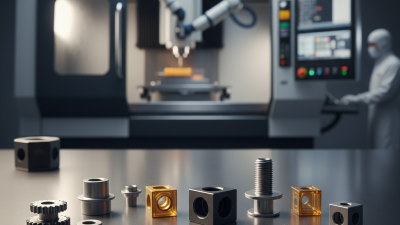
The ten common types include shafts, pins, bushings, flanges, gears, brackets, housings, manifolds, threaded fittings, and precision plates. Shafts and pins usually require controlled diameters and smooth finishes. Bushings need reliable internal clearances. Gears depend on tooth accuracy and alignment. Housings often combine pockets, bores, and mounting holes. Manifolds may contain several intersecting passages. Each part has a different inspection focus.

Parts can also be classified by geometry, manufacturing process, material, tolerance, and end use. Rotational parts usually suit turning, while prismatic parts often require milling. Thin plates may need clamping plans to prevent distortion. Tight-tolerance components demand coordinate measurement and documented inspection results. A drawing should define dimensions, datums, surface roughness, threads, and allowable variation. Classification is not always clean. A single housing may be milled, drilled, tapped, and ground. Real purchasing decisions often balance tolerance, material availability, production volume, and cost. I have found that unclear drawings create more risk than complicated shapes. A simple review before production can prevent expensive rework.

The Ten Main Types of Machined Parts for Global Buyers

Global buyers commonly source ten main types of machined parts: shafts, bushings, gears, housings, brackets, flanges, pins, manifolds, precision plates, and custom fasteners. Each type serves a different mechanical purpose. Shafts transfer rotation, while bushings reduce friction around moving assemblies. Gears require accurate tooth profiles and controlled heat treatment. Housings protect internal components from dust, vibration, and impact.

Brackets and flanges often connect or support larger systems. Pins need consistent diameter and surface finish for reliable alignment. Manifolds contain drilled channels that must match the drawing precisely. Precision plates may require flatness control across a wide surface. Custom fasteners usually involve special threads, lengths, or head shapes. Small differences matter.

From practical sourcing work, material selection should follow load, temperature, corrosion, and service conditions. Aluminum suits lightweight structures, while stainless steel supports demanding environments. Carbon steel can reduce cost, but its surface protection needs attention. A clear drawing should include tolerances, datums, thread details, and inspection requirements. It sounds basic. It is often missing.

Global buyers should review sample reports, measurement methods, packaging, and production capacity before approval. A supplier may claim tight tolerances, yet inspect only a few pieces. That gap deserves questions. I have also seen buyers over-specify surface finishes without checking real function. This increases cost unnecessarily. A better process compares performance needs with achievable machining control. Some parts still need design revision after the first prototype. That is not failure; it is useful evidence.

Materials, Geometries, and Processes Used for Each Part Type

Top 10 Types of Machined Parts for Global Buyers

Machined shafts usually use stainless steel, alloy steel, or aluminum. Their cylindrical geometry suits turning, threading, keyway milling, and centerless grinding. Bushings often use bronze, brass, or engineering plastics. Internal bores require boring, reaming, and careful tolerance control. Pins are simpler, but hardened steel may need grinding after turning. Small errors matter.

Flanges commonly use stainless steel or carbon steel. Their flat faces and bolt circles require CNC milling, drilling, and facing. Brackets are often aluminum or mild steel, with angled surfaces cut by three-axis or five-axis machining. Plates use aluminum, steel, or titanium, depending on weight and load. Their pockets and slots are milled from solid stock. Housings need rigid materials, such as aluminum or ductile iron. Complex cavities may require multi-axis machining and inspection with a coordinate measuring machine.

Gears can be machined from alloy steel, stainless steel, or PEEK for light-duty applications. Their teeth usually require hobbing, shaping, or precision milling. Manifolds use aluminum, stainless steel, or brass, with intersecting drilled passages and sealed ports. Prototype parts may combine plastics, aluminum, or tool steel, depending on testing needs. Designers sometimes choose five-axis machining too early. A simpler setup could reduce cost. Surface finish, grain direction, heat treatment, and measurement methods should be agreed before production. Drawings alone may not reveal every practical risk.

Key Specifications for Comparing Machined Part Suppliers

When global buyers compare machined part suppliers, the part category is only the starting point. Shafts, bushings, brackets, housings, flanges, gears, pins, manifolds, frames, and custom assemblies require different controls. A shaft may depend on runout and concentricity, while a housing needs reliable flatness, bore alignment, and wall thickness. Suppliers should explain how their equipment matches these requirements.

Tolerance claims need careful review. Ask for actual inspection reports, not only catalog promises. Confirm material grades, heat-treatment records, surface-finish values, and dimensional sampling plans. For tight bores, a coordinate measuring machine report can reveal problems that calipers miss. Also compare machining capacity, maximum workpiece size, minimum order quantity, lead time, and changeover experience. A low quotation may hide expensive fixture work or repeated adjustments.

Communication is measurable, too. Can the supplier review a drawing before production? Do engineers identify unclear datums or unrealistic tolerances? Request a first-article sample and define acceptance criteria before ordering. Packaging deserves attention when polished surfaces or thin walls are involved. No supplier is perfect. I have seen accurate parts delayed by weak planning, and fast deliveries fail inspection. A balanced comparison should examine quality evidence, technical judgment, production stability, and corrective-action speed, rather than price alone.

Quality, Compliance, Cost, and Shipping Factors in Global Sourcing

Top 10 Types of Machined Parts for Global Buyers?

Global buyers commonly source turned shafts, bushings, pins, flanges, brackets, gears, housings, plates, manifolds, and custom fixtures. Each type creates different inspection risks. Shafts require concentricity checks. Housings need accurate datums and surface finishes. In practical supplier reviews, a drawing alone rarely proves capability. Ask for material certificates, first-article reports, calibration records, and process-control evidence. Small documentation gaps can become expensive delays.

Quality must connect with compliance. Specify material grades, restricted-substance requirements, traceability levels, and approved inspection standards before quoting. The ISO Survey 2023 recorded more than 1.26 million ISO 9001 certificates worldwide, showing broad adoption of quality systems, but certification does not guarantee every batch. Audit the actual process. Verify measuring equipment, subcontractors, and nonconformance handling. This is where many sourcing plans remain too optimistic.

Cost and shipping can change the best supplier choice. Compare total landed cost, not unit price. Include tooling, packaging, duties, inspection, rework, and freight. Maritime transport carries over 80% of global trade by volume, according to UNCTAD’s Review of Maritime Transport 2023. Port congestion and damaged packaging still affect schedules. Use corrosion protection, shock-resistant crates, clear labels, and agreed Incoterms. The World Bank’s 2023 Logistics Performance Index also shows meaningful differences in customs and delivery reliability between economies. Faster is not always cheaper. A lower quote may hide weak packaging or repeated inspection failures.

Warning!

You are using an outdated browser. Things may not appear as intended. We recommend updating your browser to the latest version.

Close