China has become a major production base for Surface Decorative Paper, serving furniture, flooring, doors, and interior-panel manufacturers worldwide. Its advantages include large-scale coating capacity, extensive printing networks, and close access to melamine-resin processors. Yet supplier quality varies sharply.
Smithers’ market outlook on decorative papers reports steady global demand growth through 2028, supported by furniture replacement, renovation, and engineered-wood construction. Its analysis also highlights pressure on suppliers to improve print accuracy, paper strength, resin absorption, and environmental performance. Grand View Research similarly identifies rising demand for decorative laminates in residential and commercial interiors. The figures are useful, but market boundaries differ. Some reports measure decorative paper alone, while others include finished laminates.
As surface-material specialist Dr. Michael Stiehl has stated, “Design attracts attention, but consistent performance earns repeat business.” This principle matters when comparing Chinese suppliers. A beautiful sample means little if shade drift appears after pressing. Buyers should inspect basis weight, moisture control, color tolerance, abrasion results, and batch traceability. Ask for production samples, not only showroom swatches.
The strongest suppliers usually provide gravure printing, laboratory testing, customized designs, and responsive technical support. Some also offer FSC-certified or recycled-content options, subject to valid certification records. That detail deserves verification.
A practical shortlist should include manufacturers with export experience, stable raw-material sourcing, and documented quality systems. Price remains important. It should never replace testing.
The market is competitive. Mistakes still happen. This guide compares leading China Surface Decorative Paper suppliers through product consistency, technical capability, certifications, delivery reliability, and buyer experience.
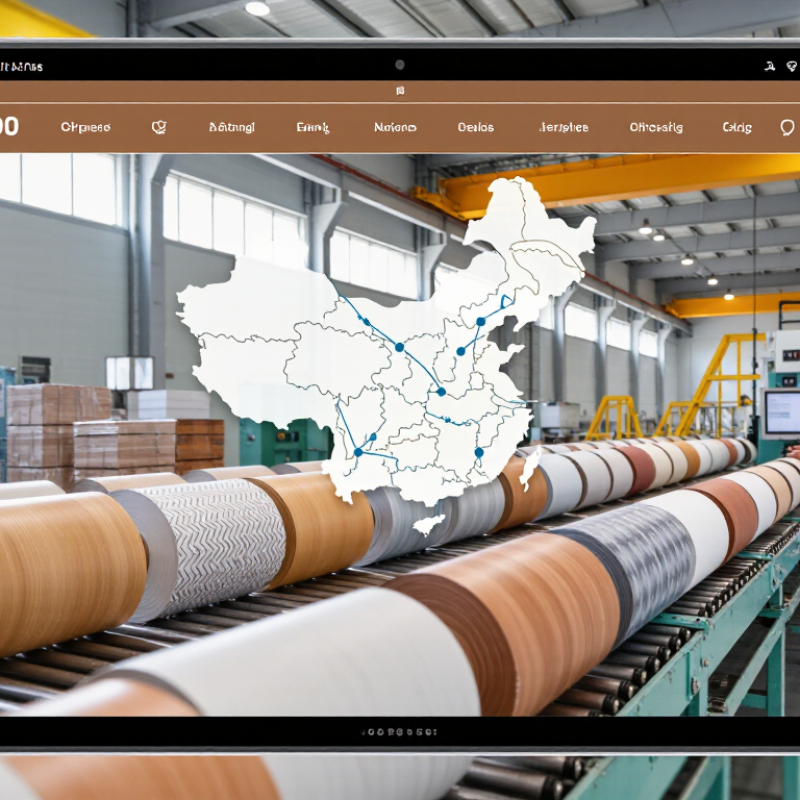
Surface decorative paper is a printed cellulose-based material used to improve the appearance and performance of interior panels. It may show wood grain, stone patterns, fabric textures, or solid colors. After printing, the paper is often impregnated with resin and pressed onto MDF, particleboard, plywood, or other prepared surfaces.
It is widely used on furniture, kitchen cabinets, wardrobes, interior doors, flooring, wall panels, and office fixtures. In a factory, the paper must match the panel’s pressing temperature, resin system, and surface finish. A clear wood pattern can fail if the color shifts between batches. Small differences become obvious across a large cabinet door.
Reliable suppliers should provide technical data, sample sheets, production tolerances, and relevant test reports. Buyers should check basis weight, print clarity, tear resistance, moisture behavior, light stability, and compatibility with laminating equipment. Formaldehyde emissions and other safety requirements also need verification for the target market.
Appearance is not enough. A paper may look convincing under showroom lighting but fade near a sunny window. I also find texture claims difficult to judge from photographs alone. Physical samples reveal more. Some suppliers offer impressive designs but inconsistent repeat lengths, which can create waste during cutting. Careful testing remains necessary, even when the sample appears perfect.

Choosing among China’s surface decorative paper suppliers requires more than comparing quoted prices. The China Paper Association reported paper and paperboard production of about 144 million tonnes in 2023. That scale creates capacity, but capacity alone does not prove stable decorative-paper quality. Request recent mill-trial records, not only laboratory samples. Check basis weight, moisture, tensile strength, opacity, printability, and resin absorption. Ask for results from independent laboratories when possible. A clean sample can hide inconsistent coating across a full production roll.
Production control deserves close inspection. Review batch coding, retained samples, inspection frequency, and complaint-response records. Suppliers should explain how they control shade differences between lots. Ask to inspect packaging, warehouse humidity, and roll-edge protection. These details matter when paper travels long distances before pressing. The FAO’s Global Forest Resources Assessment 2020 highlights the importance of traceable forest resources and responsible supply chains. Therefore, verify fiber declarations, recycled content claims, and recognized chain-of-custody documentation. Do not accept vague sustainability language.
Price is useful, but it can mislead. Compare total delivered cost, including rejected rolls, testing, storage, and replacement time. A 2023 Smithers market analysis identifies continued demand for decorative papers in furniture and interior applications, increasing pressure on converters to improve consistency. Still, forecasts are not guarantees. I would score suppliers using a weighted checklist, then run a controlled pilot order. One weakness remains: supplier websites often reveal little about process capability. An on-site audit may be inconvenient, yet it exposes practical gaps that certificates can miss.
| Evaluation Dimension | Realistic Industry Benchmark | How to Verify the Supplier | Suggested Weight | Priority |
|---|---|---|---|---|
| Product Range | Woodgrain, stone, textile, solid-color and customized decorative designs; papers commonly supplied for furniture panels, flooring, doors and interior surfaces. | Request a current design catalog, technical data sheets and physical samples covering the exact application and surface finish required. | 8% | Important |
| Basis Weight | Many decorative papers are produced in approximately the 50–120 g/m² range, depending on opacity, print effect, impregnation process and end use. | Compare the declared basis weight with test results from random production samples. Confirm the tolerance agreed in the purchase specification. | 7% | Important |
| Printing Accuracy | Consistent shade, pattern repeat, registration and ink density are essential for continuous production and panel-to-panel matching. | Approve a signed color standard, inspect pattern repeat, and conduct a pilot run before approving mass production. | 14% | Essential |
| Surface Finish Compatibility | The paper should be compatible with the customer’s impregnation resin, hot-press parameters, overlay, coating or finish system. | Test the paper with the actual resin and press conditions. Evaluate curing, gloss, texture transfer, adhesion and surface defects. | 12% | Essential |
| Dimensional Stability | Low curl, stable width and controlled moisture behavior are required to minimize wrinkling, misalignment and press defects. | Review moisture-control procedures and test roll or sheet behavior after conditioning at the customer’s production temperature and humidity. | 10% | Essential |
| Quality Control System | A reliable supplier should control incoming raw materials, color consistency, basis weight, roll condition, packaging and final release inspection. | Request inspection records, nonconformity reports, corrective-action procedures and a documented sampling plan such as AQL-based inspection. | 12% | Essential |
| Certifications and Compliance | Relevant documentation may include ISO 9001, FSC chain-of-custody where applicable, and chemical compliance documents required by the destination market. | Verify certificate numbers, validity dates, certification scope and test reports. Check compliance with applicable regulations such as REACH or customer-specific restricted-substance lists. | 9% | Essential |
| Production Capacity | Capacity should be evaluated by confirmed monthly output, available printing lines, coating or impregnation capability and peak-season utilization. | Ask for a capacity statement, production schedule, equipment list and realistic allocation for the proposed order volume. | 8% | Important |
| Lead Time | For repeat designs, production lead time is commonly shorter than for new customized designs, which require artwork approval, color matching and sampling. | Obtain separate written lead times for sampling, first production and repeat orders. Confirm the shipment date, not only the manufacturing date. | 7% | Important |
| Minimum Order Quantity | MOQ varies according to paper grade, width, printing cylinders or plates, design customization and production scheduling. | Request MOQ by design, color, width and order type. Confirm whether mixed designs can be combined in one production order. | 5% | Check Carefully |
| Packaging and Logistics | Rolls should be protected against moisture, crushing, contamination and telescoping during domestic handling and international transport. | Inspect packaging specifications, core size, roll labeling, palletization, container loading method and export documentation process. | 5% | Important |
| Technical Support | Useful support includes artwork adjustment, color matching, press-condition guidance, troubleshooting and corrective-action follow-up. | Evaluate response time and technical competence during sampling. Ask for a named contact and an escalation procedure for production problems. | 6% | Important |
| Commercial Transparency | A dependable quotation should clearly define paper grade, basis weight, width, design charges, packaging, delivery terms, payment terms and validity period. | Compare like-for-like quotations and require all additional charges to be listed before order confirmation. | 4% | Check Carefully |
| Sample Approval Process | A controlled approval process should include artwork confirmation, lab samples, color standards, pilot production and a retained reference sample. | Use a signed sample approval sheet specifying color tolerance, pattern repeat, surface finish, packaging and acceptance criteria. | 3% | Important |
| Recommended Evaluation Method: score each dimension from 1 to 5, multiply by the suggested weight, and compare only suppliers that pass all essential quality and compliance requirements. | 100% | Final Review | ||
Top China Surface Decorative Paper Suppliers?
Leading Chinese suppliers usually specialize in different surface decorative paper categories. Some focus on melamine-impregnated papers for furniture panels, flooring, and interior doors. Others produce woodgrain, stone, textile, metallic, or solid-color designs. Several factories also offer digital printing, custom pattern development, and low-grammage papers for cost-sensitive projects. In practice, the strongest supplier depends on your pressing method, substrate, design volume, and required abrasion resistance.
From sourcing experience, production consistency matters more than an attractive sample. Ask suppliers for recent batch records, technical data sheets, and testing evidence from qualified laboratories. Confirm basis weight, resin content, color tolerance, surface finish, and packaging standards. A factory may be excellent at realistic oak patterns but less capable with fine stone textures. Do not assume a large production line guarantees better service. Communication delays can still affect approvals and delivery.
Tips: Request three physical samples from separate batches. Compare them under daylight and warm indoor lighting. Check edge coverage after pressing. Keep an approved reference panel for future inspections. I once treated a supplier’s first sample as sufficient, but later batches showed slight color variation. That mistake changed my evaluation process. Price remains important, but unstable color or weak technical support can cost more than a higher quotation.
When evaluating top China surface decorative paper suppliers, examine process discipline before catalog variety.
ISO Survey data records more than one million ISO 9001 certificates worldwide, showing quality systems remain a serious purchasing signal. Certification alone proves little, however. Request batch records, coating specifications, and recent third-party test results.
Reliable manufacturers control basis weight, moisture, gloss, color, and resin absorption.
A practical tolerance review should include basis-weight variation, often targeted within ±3%, and color difference measured by ΔE. Ask for a physical sample under standard lighting.
Digital printing also supports shorter customized runs, according to Smithers’ decorative paper market analysis, which identifies digital decoration as a key development area.
Custom patterns still need repeat-length checks. Small errors become obvious across a full wall panel.
Tips:
Ask for a three-batch comparison, not one perfect sample. Check roll edges, splice marks, and packaging damage. Request testing for abrasion, light resistance, and formaldehyde emissions when the application requires it.
Audit the factory’s calibration records and corrective-action history. A supplier may provide excellent samples but inconsistent mass production. That is an uncomfortable possibility, and it deserves written controls, not optimistic assumptions.
Look for ISO 9001 procedures, but verify how operators actually use them. Camera inspection helps. Human review still matters.
Choosing among China surface decorative paper suppliers requires more than comparing prices. Begin with your panel’s actual needs: paper weight, print clarity, surface texture, resin compatibility, and expected wear. Ask for recent samples, not only catalog sheets. A sample should show color under your factory lighting.
Request technical data for basis weight, moisture range, dimensional stability, and storage conditions. Experienced suppliers should explain how their paper performs during impregnation, pressing, and cutting. Check whether production batches use controlled color references. Small shade differences become obvious across a large cabinet door.
Ask about minimum order quantities and realistic lead times. A low price means little if one delayed shipment stops your line. Review packaging details, pallet protection, labeling, and export documents. Photos of quality checks help, but an independent factory audit is stronger evidence. When possible, place a controlled trial order before approving regular supply.
Communication quality matters. Can the supplier answer technical questions without vague promises? Can they record corrective actions when defects appear? In production work, I have seen attractive samples fail because the backing paper curled after storage. That mistake changed our approval process. We now test moisture exposure, pressing temperature, and edge behavior before signing a long-term agreement.
Do not ignore small defects. Five imperfect sheets may reveal a wider process problem. A reliable supplier welcomes measured criticism and provides traceable solutions. Supplier selection is not only a purchasing decision; it affects appearance, waste, installation time, and customer trust.
You are using an outdated browser. Things may not appear as intended. We recommend updating your browser to the latest version.
Close