What Are the Top Marble Cutting Disc Types?
Choosing the right Marble Cutting Disc can determine whether a marble project looks refined or damaged. The wrong disc may leave chipped edges, uneven cuts, or visible burn marks. These problems often appear when the disc does not match the marble’s hardness, thickness, or finish.
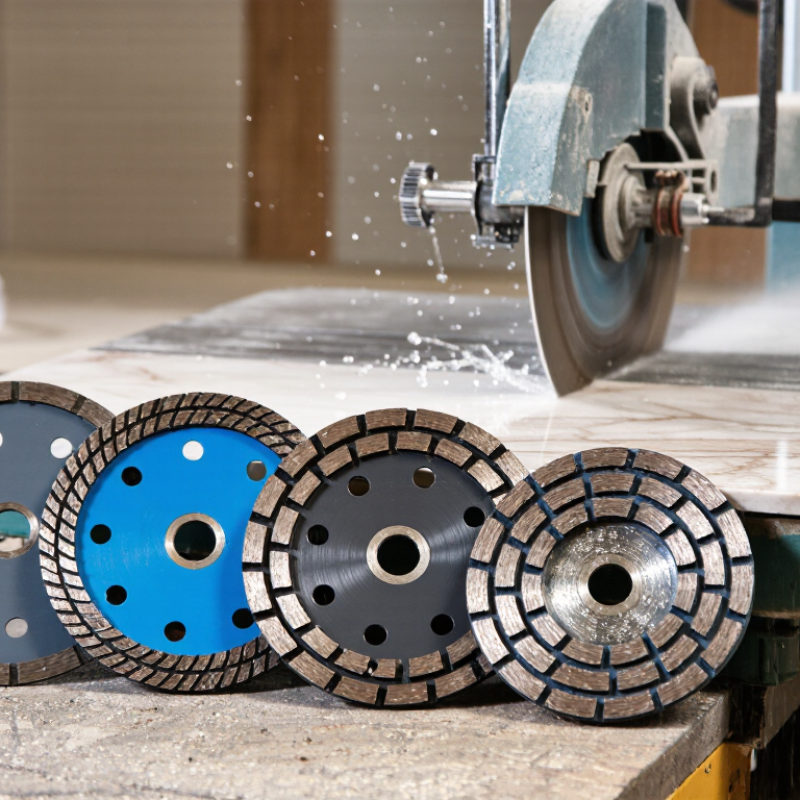
This guide examines the main types used by experienced fabricators and installation professionals. Continuous-rim diamond discs usually produce clean, controlled cuts on delicate marble surfaces. Turbo-rim discs remove material faster while maintaining reasonable edge quality. Segmented discs offer stronger debris clearance and longer working life, although they may create rougher edges. Electroplated options can suit detailed shaping, but their diamond layer may wear sooner under heavy production.
Real workshop conditions matter. A wet saw can reduce heat and airborne dust during repeated cuts. A stable guide helps keep the blade aligned across a 20-millimeter slab. Slow, even pressure often protects the edge better than forcing the tool. It sounds simple. It is not always easy.
Disc performance also depends on operator technique, machine condition, and the marble itself. A dense dark stone may respond differently from a softer, veined variety. Product descriptions can oversimplify these differences. Therefore, this comparison focuses on practical selection, cutting behavior, finish quality, durability, and common limitations. No single disc wins every job. Even experienced users sometimes choose poorly after judging only by price. A careful test cut remains one of the most reliable ways to confirm suitability before completing visible work.
Marble Cutting Disc Basics and Selection Criteria
What Are the Top Marble Cutting Disc Types?
Marble Cutting Disc Basics and Selection Criteria
Marble cutting discs generally use diamond particles to cut this relatively soft, yet brittle, stone. A continuous-rim disc usually produces the cleanest edge with less chipping. Segmented discs remove material faster, but their cuts may look rougher. Turbo-rim designs offer a practical balance between speed and surface quality. That balance is useful. Finish and speed rarely come together perfectly.
Selection starts with the marble thickness, machine type, and required edge quality. Match the disc diameter and arbor hole to the equipment. Check the machine’s maximum RPM before installation. For polished marble, a continuous rim is often the safer choice for visible edges. Dry cutting is convenient, but it creates airborne dust and requires suitable ventilation. Wet cutting helps cool the disc and reduce dust. Read the cutting-depth rating carefully. Small details matter.
Inspect the disc for cracks, warping, loose segments, or uneven wear before use. A damaged core should not be ignored. Use the guard, eye protection, hearing protection, and suitable respiratory protection when dust is present. Do not force the blade. Excessive pressure can overheat the rim and fracture the marble. A test cut on an offcut can reveal unexpected chipping or color changes. Marble varies more than many selection charts suggest. Even an experienced operator can choose poorly when hidden veining changes the cutting response. That is why actual cutting feedback deserves attention.
Diamond Disc Types for Different Marble Cutting Tasks
Diamond Disc Types for Different Marble Cutting Tasks
Marble varies in hardness, veining, and moisture content, so one diamond disc cannot suit every cut. Continuous-rim discs usually produce the cleanest edges on polished marble and thin slabs. Their uninterrupted diamond layer reduces vibration and visible chipping. Turbo-rim discs cut faster, but they may leave slightly rougher edges. They work well for sink openings, curves, and renovation cuts. Segmented discs are aggressive, yet often too harsh for delicate marble. Use them only when speed matters more than edge quality.
A wet-cut continuous-rim disc is normally the safer choice for straight countertop cuts. Water cools the rim and helps carry abrasive particles away. OSHA limits respirable crystalline silica exposure to 50 micrograms per cubic meter over eight hours. Dry cutting can create serious dust, even when the surface looks clean. The U.S. Geological Survey reported global natural stone production near 150 million metric tons in recent years, showing how widely cutting efficiency matters across fabrication work.
Match the disc to the marble, not just the machine. Softer marble can respond well to a medium-grit turbo rim, while dense marble often needs a softer bond. Check the disc’s rated speed before mounting it. Never force the blade through a veined section. That common shortcut causes fractures. A perfect-looking face may hide damage underneath. Reports from Grand View Research place the global natural stone market above 30 billion dollars, but market growth does not remove basic cutting mistakes. Test on an offcut first. It costs less.
How Disc Bond, Segment Design, and Grit Affect Cutting
What Are the Top Marble Cutting Disc Types?
Marble cutting discs differ mainly through bond, segment design, and grit. The bond holds abrasive diamonds and controls their release during cutting. A hard bond can last longer on soft marble, but it may glaze on dense stone. A softer bond exposes fresh diamonds faster and often cuts cooler. That choice is easy to misjudge. In practical work, the disc should produce a steady kerf without forcing the grinder. If cutting dust becomes heavy and the rim turns shiny, the bond may be too hard.
Segment design affects cooling, debris removal, and edge control. Narrow turbo segments often cut quickly and leave a reasonably clean edge. Continuous rims can improve finish quality around visible sink openings and narrow curves. Separated segments usually clear slurry and dust more effectively. However, wide gaps may increase vibration on thin tiles or fragile corners. Grit adds another layer. Coarse grit removes material quickly, while fine grit supports smoother edges. A coarse disc can chip a polished face when pressure is excessive. No selection is perfect.
Tips: Match bond hardness to marble density, then make a short test cut. Check the edge under bright light. Small chips may appear only after the surface dries. Use the disc only with compatible equipment and suitable protective controls. Keep the feed steady, avoid twisting, and let the diamonds cut. Reconsider the disc if the cut feels forced.
What Are the Top Marble Cutting Disc Types?
How disc bond, segment design, and grit affect cutting performance
The index compares common marble-disc designs under equivalent operating conditions. Continuous-rim discs generally produce the smoothest edge, turbo discs balance cutting speed and finish, and segmented discs provide the fastest stock removal and longest cooling intervals. Finer diamond grit improves surface quality, while harder bonds typically extend disc life on softer marble.
Safe and Efficient Marble Cutting Disc Use
What Are the Top Marble Cutting Disc Types?
Safe and Efficient Marble Cutting Disc Use
Marble cutting requires the right disc, steady handling, and controlled dust. Continuous-rim diamond discs usually produce the cleanest edges on marble. Their uninterrupted rim reduces chipping around polished surfaces. Turbo-rim discs cut faster, but they may leave rougher edges. Segmented discs are efficient for hard masonry, yet they can create more vibration and damage delicate marble.
Check the disc’s maximum RPM before mounting it. It must exceed the grinder or saw speed. Inspect the rim for cracks, missing diamonds, or uneven wear. Small defects can become dangerous at high speed. Keep the guard correctly positioned. Do not remove it for visibility. That shortcut is tempting, but it weakens protection.
Water-fed cutting can reduce airborne dust and cool the disc. The U.S. OSHA silica standard sets a respirable crystalline silica action level of 25 micrograms per cubic meter over eight hours, with a 50-microgram permissible exposure limit. NIOSH also identifies wet methods and local exhaust ventilation as important exposure controls. Marble composition varies, so dust should never be treated as harmless. Use suitable eye, hearing, and respiratory protection. Maintain stable support beneath the slab, mark the cut clearly, and let the diamond rim do the work. Excessive pressure slows cutting and increases chipping. I still see operators push too hard when the disc feels slow. Usually, the disc needs inspection, not force.