What Type of Titanium Is Best for Parts?

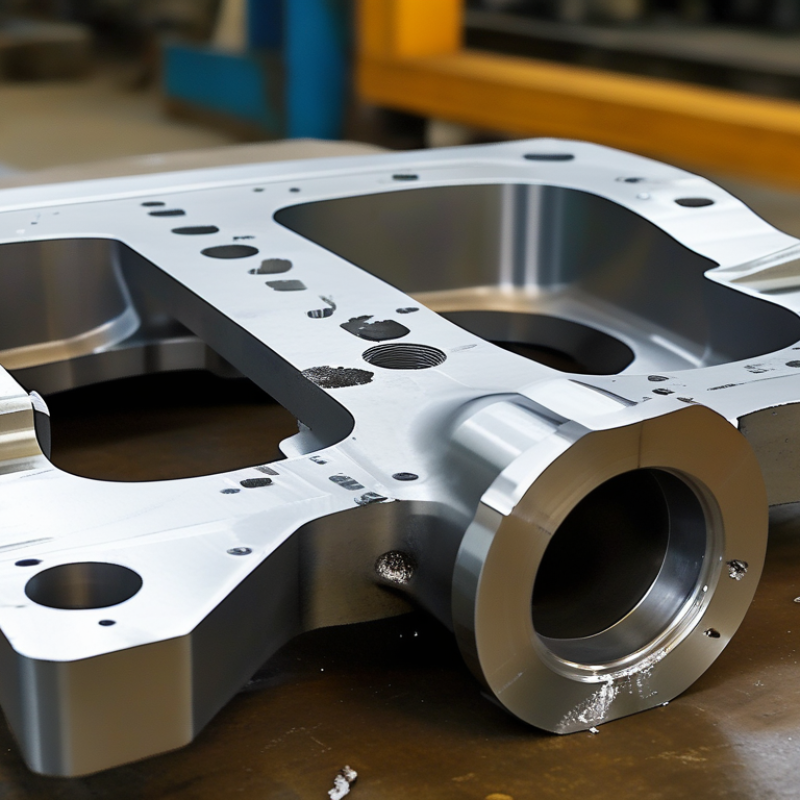
Choosing the right titanium grade for parts is rarely as simple as selecting the strongest option. The best material depends on load, temperature, corrosion exposure, manufacturing method, and budget. For many demanding applications, Ti-6Al-4V, commonly called Grade 5, offers a practical balance of strength, weight, fatigue resistance, and corrosion performance. It is widely used in aerospace, medical equipment, marine systems, and high-performance machinery. Yet popularity does not make it suitable for every design.

Commercially pure titanium, such as Grade 2, can be a better choice when corrosion resistance and formability matter more than maximum strength. Beta alloys may provide higher strength or improved cold-forming behavior, but they often require tighter process control and higher material costs. Grade 23, known for its lower interstitial content, is often considered for specialized medical and fatigue-sensitive applications. These differences can change machining behavior, surface finish, service life, and final part reliability.

Small details matter.

An experienced engineer should review the complete operating environment before approving Titanium Parts. A thin bracket exposed to saltwater needs different priorities than a heat-resistant engine component. Tool wear, galling, residual stress, and post-machining treatment also deserve attention. Material certificates and traceability should come from a qualified supplier, not from assumptions. Standards help, but they cannot replace application testing.

There is no universal “best” titanium. That answer sounds convenient, but it is incomplete. The most reliable choice comes from matching grade, geometry, process, and verified performance. Even experienced teams sometimes overlook manufacturing constraints. Careful review prevents expensive surprises.
What Type of Titanium Is Best for Parts?

Titanium Grades and Their Key Properties for Parts

What Type of Titanium Is Best for Parts?

Titanium grade selection depends on strength, corrosion resistance, weight, forming, and machining requirements. Commercially pure grades, from Grade 1 to Grade 4, offer excellent corrosion resistance and increasing strength. Grade 2 provides a practical balance for tanks, brackets, and fluid-handling parts. Grade 4 is stronger, but it may require more forming force and machining control. Grade 9, often called a titanium-aluminum-vanadium alloy, combines moderate strength with useful ductility for tubing and lightweight structures.

Grade 5 is widely selected when high strength-to-weight performance matters. It suits aerospace-style brackets, shafts, and heavily loaded components. However, it is not automatically the best choice. Its lower thermal conductivity can increase cutting temperatures and tool wear. Grade 23 offers improved fracture toughness and lower oxygen content, which can matter in demanding applications. Specifications, heat treatment, surface condition, and manufacturing capability must be checked together. A drawing alone rarely tells the full story.

Tips: Match the grade to the real load, temperature, and environment. Test a sample part when tolerances are tight. Avoid choosing by strength alone. Welding, cold forming, and finishing can change performance. No grade is perfect. The best selection is the one that remains reliable after fabrication, inspection, and service.

How Part Requirements Determine the Best Titanium Type

What Type of Titanium Is Best for Parts?

The best titanium type depends on the part’s real operating demands. Weight alone is not enough. ASM Handbook data places titanium density near 4.51 g/cm³, compared with roughly 7.85 g/cm³ for carbon steel. That difference matters in brackets, rotating components, and portable assemblies. However, a lighter part may still fail if its stiffness, fatigue life, or joint design is ignored.

For general corrosion-resistant parts, Grade 2 is often a practical choice. ASTM B348/B348M specifies a minimum tensile strength of about 345 MPa for Grade 2. It suits chemical equipment, fasteners, and moderate-temperature structures. Grade 5 offers much higher strength, with a specified minimum near 895 MPa. It is better for heavily loaded aerospace-style brackets, shafts, and compact structural parts. Strength comes with trade-offs. Grade 5 usually costs more and requires greater machining control.

Do not select a grade from a catalog photograph. Define the load, temperature, environment, surface finish, and manufacturing route first. In shop reviews, the recurring mistake is choosing Grade 5 when Grade 2 already meets the design limit. That shortcut wastes material and machining time. The opposite error is more serious. A thin Grade 2 component may deform under repeated loading, even when its static strength looks acceptable. The 2024 USGS Mineral Commodity Summaries estimated global titanium sponge production at approximately 280,000 metric tons in 2023, showing a specialized supply chain rather than an unlimited one. Material availability should enter the decision early. Estimates vary. Part geometry still decides more than headline strength.

Comparing Commercially Pure Titanium and Titanium Alloys

Choosing titanium starts with the load, environment, and manufacturing route. Commercially pure titanium includes Grades 1 through 4, with strength increasing as oxygen and iron levels rise. Grade 2 typically offers a minimum tensile strength of 345 MPa under ASTM B348/B348M. It also bends more easily and resists corrosion well in many chloride-rich environments. That makes it practical for light brackets, tanks, heat exchangers, and formed sheet parts.

Titanium alloys trade some formability for strength. Grade 5, commonly specified as Ti-6Al-4V, reaches a minimum tensile strength of about 895 MPa under the same ASTM standard. It suits loaded shafts, aerospace fittings, medical structures, and compact parts where weight matters. The tradeoff is real. Grade 5 usually requires more careful machining, stronger tooling, and tighter control of heat during cutting.

Availability also affects a responsible choice. The U.S. Geological Survey’s Mineral Commodity Summaries 2024 estimated global titanium sponge production at roughly 280,000 metric tons in 2023. That figure reflects upstream capacity, not guaranteed delivery or final-part cost. A common mistake is selecting Grade 5 simply because it is stronger. In practice, its extra strength may add machining time without improving the part. I would check corrosion chemistry, section thickness, forming radius, fatigue loading, and inspection requirements before approving the drawing. A small design review can prevent an expensive material upgrade.

Choosing Titanium Grades for Strength, Corrosion Resistance, and Weight

What Type of Titanium Is Best for Parts?

Choosing titanium starts with the load case, not the alloy’s reputation. Grade 2 commercially pure titanium offers strong corrosion resistance in seawater and many chemical environments. ASTM B265 lists a minimum tensile strength of 345 MPa for Grade 2 sheet and plate. Its density is about 4.51 g/cm³, compared with roughly 7.85 g/cm³ for carbon steel. Lighter, but not automatically stronger.

Grade 5, Ti-6Al-4V, is the usual strength-focused choice. ASTM B265 specifies at least 895 MPa tensile strength for annealed Grade 5 products. ASM Handbook data places its density near 4.43 g/cm³. That combination suits aircraft fittings, robotic arms, and compact rotating parts. However, Grade 5 may be excessive when corrosion resistance matters more than maximum strength. I have seen designs over-specify it when Grade 2 would likely have survived.

For severe corrosion, Grade 7 adds palladium and improves resistance in reducing acids. Grade 23 ELI reduces oxygen and iron limits, supporting better fracture toughness for cold-service parts. The choice is not only about peak strength. Thread design, galling, weld quality, and heat treatment can decide service life. Titanium-on-titanium contact needs attention. Dry sliding can seize unexpectedly. The 2024 USGS Mineral Commodity Summaries report also highlights the importance of titanium sponge quality and processing. Certified chemistry and traceable mill records matter. Test the real fluid, temperature, and stress cycle. Data sheets alone can mislead.

What Type of Titanium Is Best for Parts? — Choosing Titanium Grades for Strength, Corrosion Resistance, and Weight

Titanium Grade Material Type Typical Density
(g/cm³)
Minimum Tensile Strength
(MPa)
Minimum Yield Strength
(MPa, 0.2% offset)
Corrosion Resistance Machinability Weldability Best-Suited Parts and Applications
Grade 1 Commercially pure titanium; lowest strength and highest ductility among the common unalloyed grades. 4.51 240 170 Excellent in oxidizing, neutral, and mildly reducing environments; strong resistance to seawater. Fair; relatively easy to form, but cutting heat must be controlled. Excellent with suitable shielding and cleanliness. Light-duty chemical processing parts, heat exchangers, liners, and highly formable components.
Grade 2 Commercially pure titanium; the most widely used unalloyed grade for general corrosion-resistant service. 4.51 345 275 Excellent resistance to seawater, chlorides, oxidizing acids, and many chemical environments. Fair; requires sharp tools, low cutting speeds, and effective heat removal. Excellent when contamination and atmospheric exposure are prevented. Piping, tanks, fasteners, heat exchangers, marine parts, and general corrosion-resistant machined components.
Grade 3 Commercially pure titanium; higher strength than Grades 1 and 2 with lower ductility. 4.51 450 380 Excellent, broadly comparable to other commercially pure titanium grades. Fair to moderate; stronger material can require more cutting force. Excellent with proper inert-gas protection. Moderately loaded chemical-processing equipment and structural parts requiring more strength than Grade 2.
Grade 4 Commercially pure titanium; highest strength among the commonly specified unalloyed grades. 4.51 550 485 Excellent resistance to seawater and many industrial chemical environments. Fair to moderate; work-hardening and low thermal conductivity require careful machining. Excellent with controlled shielding and joint preparation. Higher-load corrosion-resistant parts, aerospace components, pressure-related hardware, and medical components.
Grade 5
(Ti-6Al-4V)
Alpha-beta alloy; the most widely used high-strength titanium alloy. 4.43 895 825 Excellent in seawater, chlorides, and many oxidizing environments; less suitable for certain strongly reducing acids. Poor to fair; low thermal conductivity and high strength increase tool wear and heat concentration. Good with controlled inert-gas shielding; post-weld heat treatment may be needed for some conditions. High-strength, weight-sensitive brackets, shafts, housings, aircraft parts, motorsport parts, and general structural components.
Grade 7 Commercially pure titanium with a small palladium addition for enhanced corrosion performance. 4.51 345 275 Outstanding resistance in reducing acids and crevice-corrosion conditions compared with standard commercially pure grades. Fair; similar machining behavior to Grade 2. Excellent with suitable shielding and clean fabrication practices. Chemical-processing equipment exposed to reducing acids, crevices, brines, and severe corrosion conditions.
Grade 9
(Ti-3Al-2.5V)
Alpha-beta alloy; stronger than commercially pure titanium and more formable than Grade 5. 4.48 620 485 Excellent resistance to seawater and many chloride-containing environments. Fair; generally easier to form and machine than Grade 5. Good with proper shielding and heat control. Thin-wall tubing, hydraulic lines, bicycle and sporting components, and parts needing a balance of strength and formability.
Grade 12
(Ti-0.3Mo-0.8Ni)
Low-alloy alpha titanium with improved resistance to crevice and mildly reducing corrosion conditions. 4.51 483 345 Very good, particularly in brines, seawater, and some mildly reducing industrial environments. Fair; similar to other titanium alloys of comparable strength. Good to excellent with appropriate inert-gas protection. Heat exchangers, pressure vessels, chemical-processing equipment, and marine components requiring added corrosion margin.
Grade 23
(Ti-6Al-4V ELI)
Extra-low-interstitial version of Grade 5 with improved fracture toughness and ductility. 4.43 825 760 Excellent in marine, aerospace, and physiological environments when properly processed. Poor to fair; machining requirements are broadly similar to Grade 5. Good with strict control of shielding, cleanliness, and heat input. Critical aerospace parts, cryogenic components, fracture-sensitive structures, and implantable medical components.

Note: Mechanical properties shown are representative minimum values for common wrought product specifications at room temperature. Actual values vary with product form, thickness, heat treatment, processing condition, and applicable material standard.

Manufacturing and Cost Factors in Titanium Part Selection

What Type of Titanium Is Best for Parts?

Titanium selection should begin with the part’s working conditions, not the material’s reputation. Grade 2 offers good corrosion resistance and easier forming for moderate loads. Grade 5 provides higher strength for aerospace, medical, and performance components. Grade 23, with lower interstitial content, can suit demanding medical applications requiring improved fracture toughness.

Manufacturing changes the cost quickly. Titanium conducts heat poorly, so cutting tools experience concentrated heat near the cutting edge. The material also work-hardens when feeds or tool paths are poorly controlled. Slow machining, frequent tool changes, and tight tolerances can raise costs more than the raw stock price. Complex internal channels may benefit from additive manufacturing, but inspection, support removal, and porosity control add expense. Not always cheaper.

Material waste deserves attention. A small precision part may begin as a large billet, leaving valuable scrap after machining. Larger production batches can spread programming, setup, and inspection costs. Surface finishing, heat treatment, traceable certificates, and non-destructive testing may also be necessary. I would not choose Grade 5 automatically. It may exceed the design requirement and complicate machining without improving service life. A practical selection compares strength, corrosion exposure, production volume, tolerance, and repair expectations. The “best” titanium is often the grade that meets requirements with fewer manufacturing compromises.

Warning!

You are using an outdated browser. Things may not appear as intended. We recommend updating your browser to the latest version.

Close