Aluminum die casting is a high-speed manufacturing process for producing precise metal components. It forces molten aluminum into a hardened steel die under substantial pressure. The die opens after solidification, revealing a near-net-shape part with defined ribs, bosses, and mounting holes. This method supports automotive housings, industrial pump bodies, electronic enclosures, and many structural components.
The scale of aluminum production explains its industrial importance. The U.S. Geological Survey reported approximately 74 million metric tons of global primary aluminum production in 2024. The International Aluminium Institute also identifies aluminum as a strategic material for transport, construction, and energy applications. Yet, primary metal production remains energy-intensive. IAI estimates that recycling aluminum requires about 5% of the energy used for primary production. That difference encourages manufacturers to control scrap, return runners, and specify recycled content carefully.
The process begins with alloy selection, melting, and temperature control. A shot sleeve then transfers the metal into the die cavity. Injection speed must remain high enough to prevent premature freezing. Pressure holds the metal against the cavity wall while heat moves into the die steel. After ejection, operators trim excess material and inspect critical dimensions.
Small details matter.
NADCA’s Product Specification Standards emphasize die design, alloy condition, porosity control, and dimensional verification. These factors influence fatigue life, sealing performance, and machining allowances. However, aluminum die casting is not automatically the best solution for every component. Complex internal voids, low production volumes, or severe structural loads may favor another process. That distinction is easy to overlook. This guide examines how aluminum die casting works, where it performs well, and which practical limitations engineers should question before committing to a design.
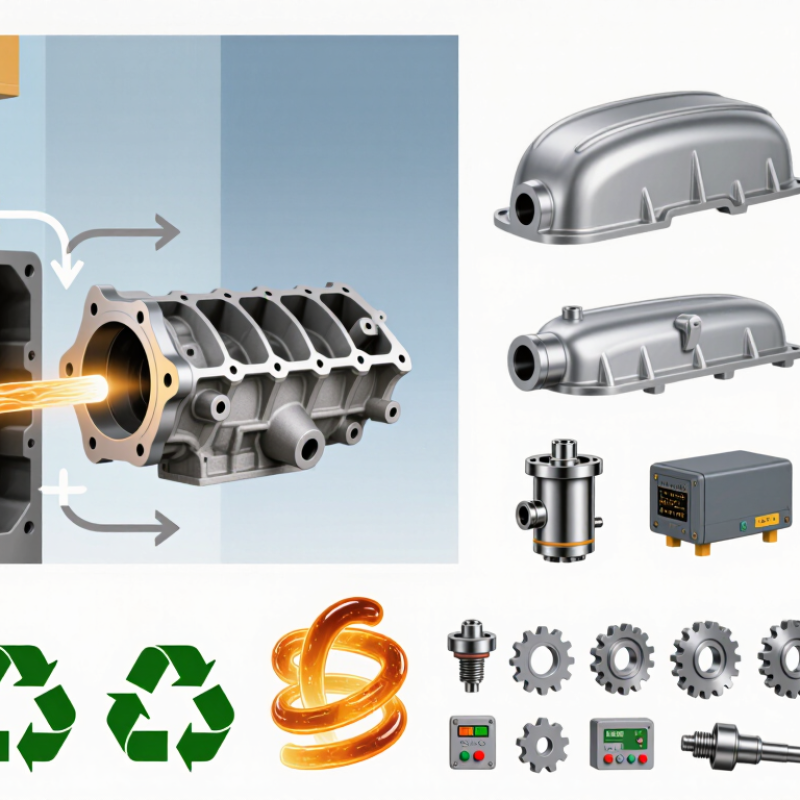
Aluminum die casting is a manufacturing process for making precise metal parts. It uses molten aluminum alloy and a reusable steel mold, called a die. The machine injects the liquid metal into the die under high pressure. Pressure matters. When the cavity fills, the aluminum quickly follows its detailed shape and begins to solidify. This method suits housings, brackets, covers, and other parts needing consistent dimensions.
A typical cycle begins with heating the alloy until it becomes fully liquid. The die contains channels, vents, and cooling lines to control metal flow and heat. After cooling, ejector pins push the solid part from the mold. Excess material from gates and flash is trimmed away. The finished surface may look smooth, but it still needs inspection. Technicians check dimensions, wall thickness, surface defects, and possible internal pores.
In practice, die casting is fast, repeatable, and material-efficient. It is not perfectly forgiving. Poor venting can trap air, while incorrect temperatures may cause cracks or incomplete filling. Engineers often use simulation and trial runs before approving production settings. X-ray or pressure testing may reveal hidden porosity in critical components. A strong design also avoids sudden wall changes and sharp internal corners. These details seem small. They can decide whether a casting performs reliably or fails early.
| Data Dimension | Typical Information | How It Relates to the Process |
|---|---|---|
| Process Definition | A metal casting process that injects molten aluminum alloy into a reusable steel die under high pressure. | The die forms the part cavity, while pressure forces the metal into thin sections and detailed features before solidification. |
| Main Machine Types | Cold-chamber and hot-chamber die-casting machines; aluminum is generally processed using cold-chamber equipment. | In a cold-chamber machine, a separate shot sleeve receives each measured charge of molten aluminum before injection. |
| Typical Injection Pressure | Approximately 30–150 MPa, depending on the machine, alloy, part geometry, and filling requirements. | Higher pressure can improve filling of thin walls and complex details, but may increase flash, die wear, and air entrapment. |
| Aluminum Temperature | Common metal temperatures are roughly 630–750°C, with the exact range determined by the alloy and application. | The temperature must be high enough for complete filling but controlled to limit oxidation, soldering, shrinkage, and die erosion. |
| Die Material | Heat-resistant tool steel is commonly used for die inserts, cores, and cavity components. | The die must withstand repeated thermal cycling, high mechanical pressure, abrasion, and contact with molten aluminum. |
| Basic Operating Sequence | Die closing → metal dosing → injection → pressure holding → solidification → die opening → part ejection. | The coordinated sequence produces repeatable parts at high production rates and minimizes manual handling. |
| Common Alloy Families | Aluminum-silicon alloys are widely used; alloy chemistry is selected according to fluidity, strength, corrosion resistance, and machinability. | Silicon generally improves castability and wear behavior, while other alloying elements can modify strength and corrosion performance. |
| Typical Wall Thickness | Many aluminum die-cast components use walls around 1.5–4 mm; the practical minimum depends on flow length, alloy, and design. | Uniform walls help the metal fill consistently and reduce premature freezing, porosity, and distortion. |
| Dimensional Capability | Good repeatability is possible, but tolerances vary with part size, geometry, die condition, and whether machining is applied. | Critical bores, sealing faces, and datum surfaces are often machined after casting to achieve tighter specifications. |
| Production Volume | Best suited to medium- and high-volume production because dies and tooling require significant initial investment. | The cost per part generally decreases as the production quantity increases and the tooling cost is distributed over more parts. |
| Key Advantages | High repeatability, fast cycle times, thin-wall capability, good surface finish, and the ability to integrate multiple features. | Ribs, bosses, mounting points, and other details can often be formed in one casting, reducing assembly and machining requirements. |
| Common Defects | Porosity, cold shuts, misruns, flash, soldering, shrinkage, distortion, and incomplete filling. | Defects are influenced by melt quality, die temperature, venting, injection speed, pressure, lubrication, and part design. |
| Typical Applications | Housings, brackets, motor components, heat sinks, structural supports, pump bodies, and automotive or industrial hardware. | The process is useful where lightweight construction, dimensional consistency, complex geometry, and high production efficiency are required. |
Note: Values are typical engineering ranges. Final process parameters should be validated for the selected aluminum alloy, die design, machine, and product requirements.